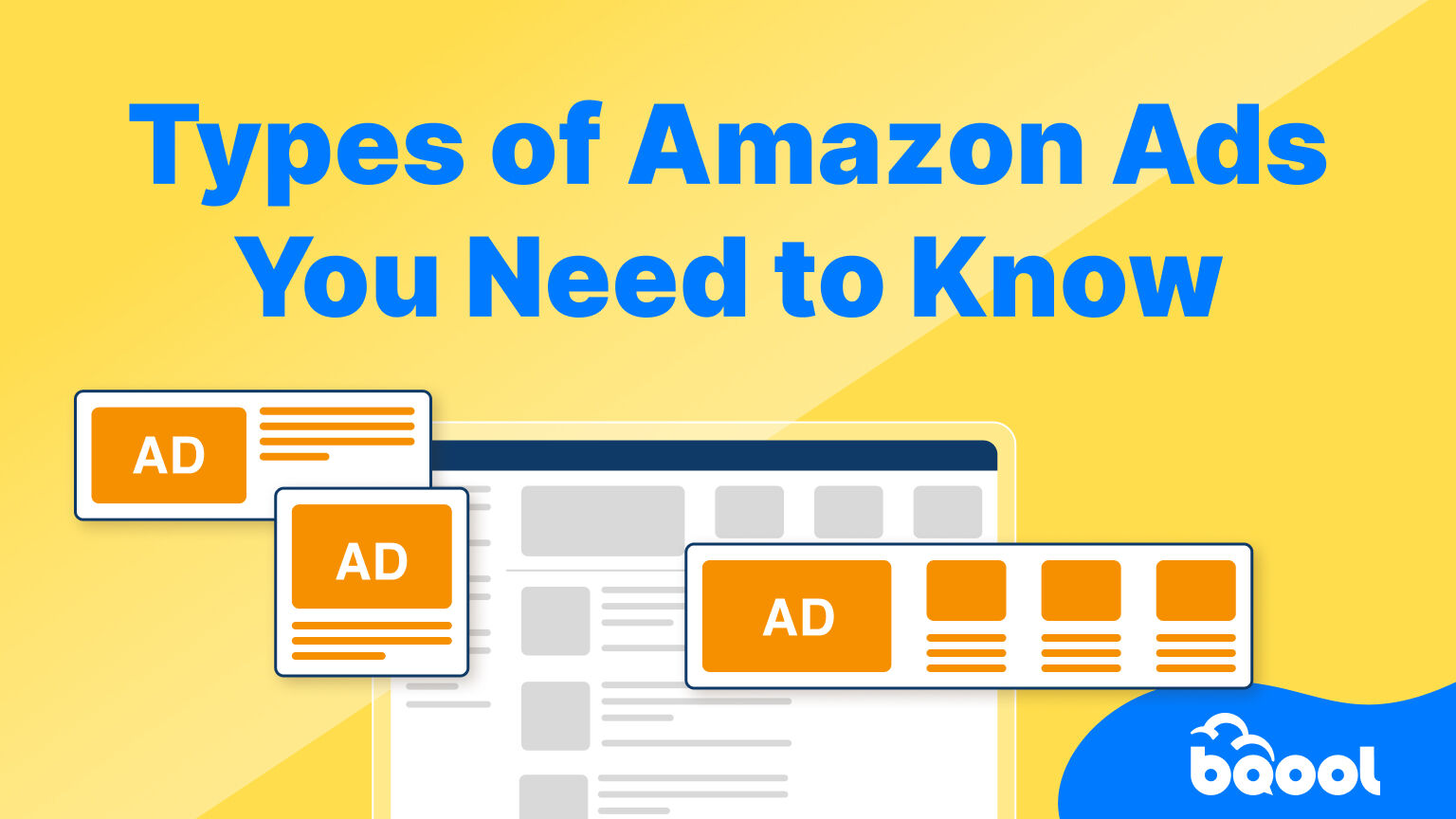
Types of Amazon Ads You Need to Know
For many new Amazon sellers, navigating Amazon Ads can feel overwhelming. With multiple types of amazon ads that look similar on the surface but function differently, it can be hard to know which one to use, when to use it, and how each format supports visibility, conversions, or brand growth. If you are trying to understand the key differences between Amazon’s ad types and how they work, this guide breaks it down so you can choose the right ad type with confidence.
Overview
What Is Amazon Advertising?What Are the Types of Amazon Ads?Amazon Sponsored ProductsWhy does the Buy Box affect the visibility of Amazon Ads?How to Check Buy Box Status in Seller CentralHow to Check Buy Box Status on BQool RepricerSponsored BrandsSponsored DisplayWhich type of Sponsored Ads should I use?Conclusion
What Is Amazon Advertising?
Amazon Advertising is used by sellers and vendors to manage ads across the Amazon ecosystem. This means that sellers can advertise both on and off Amazon marketplace, however it is mainly used to drive sales on Amazon marketplace. There is a range of ad formats designed to help sellers place their products in front of shoppers who are browsing or actively searching for items that are like or exactly what they offer.
Amazon ads influence three important areas:
- Boost Visibility. Ads place your products in high traffic positions, allowing you to reach shoppers who might not find you through organic search. Since many sellers often offer similar products, newer listings or those with fewer reviews may appear deeper in the search results after the first page. Advertising helps your product surface higher up, increasing the chances that potential customers will see it.
- Improve Ranking. Paid traffic can help generate steady sales, which contributes to stronger organic rankings over time. As your sales increase, you also gain more opportunities to collect positive reviews, which further improves your visibility and credibility.
- Accelerate Growth. For new sellers who have recently launched products, Amazon ads provide a reliable stream of traffic that arrives much faster than waiting for organic momentum to build. This is valuable for sellers to quickly establish a positive reputation and gain trust from online shoppers.
However, each Amazon ad type serves a different purpose, so selecting the right format is important.
What Are the Types of Amazon Ads?
Amazon offers a variety of ad formats designed for different seller goals. The main types of Amazon ads include:
- Sponsored Products, the most popular ad type, which focuses on promoting individual product listings and focus on conversions per unit.
- Sponsored Brands which highlight your brand as a whole and the option to showcase a selection of products to increase visibility and brand awareness.
- Sponsored Display which uses audience and product-based targeting to re-engage shoppers who have shown interest in your products or target new, suitable customers.
Amazon Sponsored Products
What Are Sponsored Products?
Sponsored Ads are Amazon’s most used ad type, and consequently it has the highest ad spend, alongside the highest clicks and impressions. Sponsored Product ads show up more often compared to the other Amazon ad formats, appearing on organic search results and product pages. It highlights a single product, and once clicked, it leads shoppers straight to that product’s detail page.
Should You Use Sponsored Products?
Sponsored Products are well suited for nearly all Amazon sellers, especially those focused on driving conversions and improving keyword ranking. They are ideal for new product launches, seasonal pushes, and maintaining steady sales volume on core items. If your goal is to achieve a faster turnover for your inventory over a shorter period of time, this is the ad type to prioritize. This format is available to vendors and sellers with a professional seller account, making it a common starting point for new advertisers.
Where Do Sponsored Products Appear?
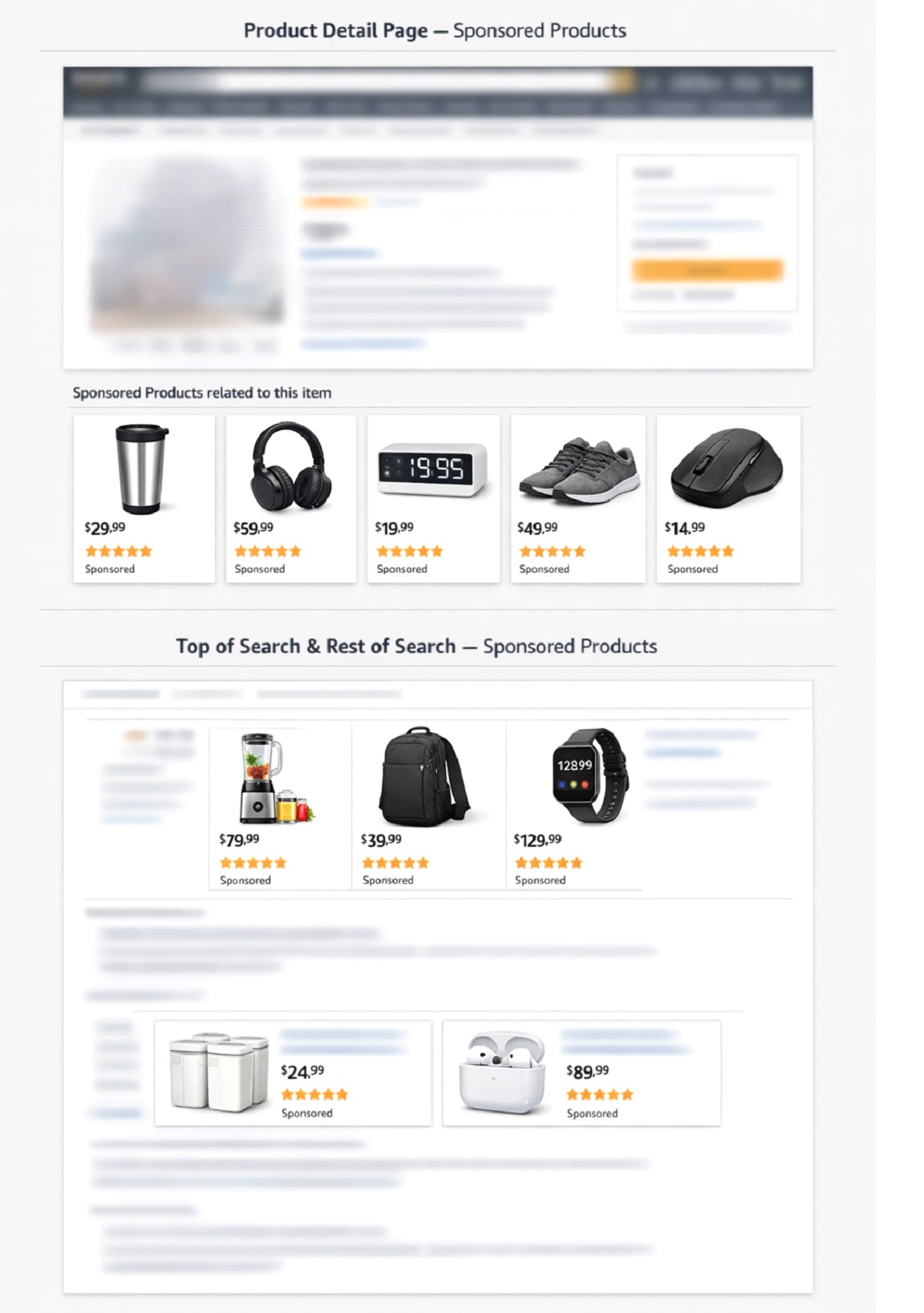
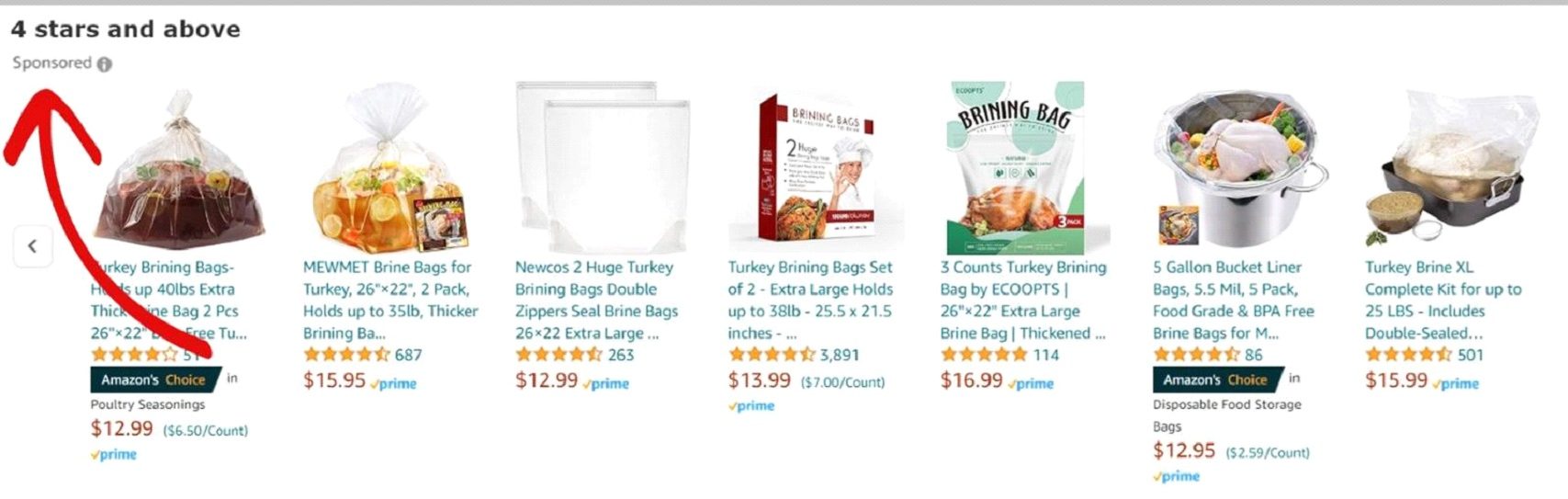
Sponsored Products ads make up the majority of ad placements on Amazon marketplace, appearing in several key locations where shoppers are actively browsing and making purchase decisions. Amazon names these locations, Top of Search (ToS) which are at the top row of search results, Rest of Seach (ROS) which are lower on the search result pages, and Product Detail Pages (PDPs), which are within the product detail pages itself. Amazon Sponsored Ads can appear both on and beyond Amazon, where Amazon-owned websites and third-party locations support Amazon Sponsored Ads.
How Are Sponsored Products Priced?
Sponsored Products run on a cost per click (CPC) auction model. You set the highest amount you are comfortable paying for a click, and Amazon will not exceed that number. The stronger your bid, the better your chances of winning ad placement. Amazon charges you only for the clicks your ads generate.
Example
For example, if you set a daily budget of 10 dollars and each click costs 1 dollar, your ad would stop running for the day once you have received 10 clicks.
What are the benefits of Sponsored Products?
Sponsored Products can increase visibility quickly, help drive conversions, and support organic ranking through increased sales activity. This format is effective for both new product launches and ongoing sales optimization.
Beyond this, launching a Sponsored Products ad campaign can help sellers gather insights into their target market, and help to reach a more relevant audience with ease through customized target keywords.
Best Practices for Sponsored Products
Begin with automatic targeting to collect data, then transition into manual targeting for precision. Use negative keywords to avoid irrelevant clicks and ensure your listing quality and pricing are competitive before sending paid traffic.
Do Sponsored Products support video ad formats?
As of November 11, 2025, Amazon announced the launch of a new video format for Sponsored Products. This update gives sellers more creative control over how their products are presented to shoppers. Sellers can now upload one to five product feature videos for each ASIN and include a description for every feature. When shoppers click the ad, they are directed to the product detail page for more information.
According to available information, this video option becomes visible only after a campaign has been created, not during the initial setup process. Data on average CPC and overall performance is still limited, as the format is new and currently in Beta. Amazon is gradually rolling out access to seller accounts, so not all sellers will see this feature yet.
Overall, Sponsored Products are easy to set up, highly visible, and accessible to all sellers, which makes them a strong starting point for Amazon advertising. Although competition can be high, and Buy Box eligibility affects visibility, these challenges can be managed with good pricing, optimized listings, and smart targeting.
Why does the Buy Box affect the visibility of Amazon Ads?
The Buy Box directly impacts ad visibility on Amazon because Sponsored Product ads only appear when you win the Buy Box. If you do not own the Buy Box for a specific ASIN, your Sponsored Product ads will not be shown at all.
Some ad formats, such as certain Sponsored Brands and Sponsored Display ads, may still appear even if you don’t hold the Buy Box. However, losing the Buy Box generally means your ads disappear from search results, leading to lost impressions, traffic, and potential sales.
Because of this, it’s important to regularly monitor your listings and ensure that the ASINs you are advertising maintain Buy Box eligibility and ownership.
How to Check Buy Box Status in Seller Central
To check Buy Box eligibility and ownership in Seller Central:
- Go to Manage Inventory
- Click Preferences
- Enable the Buy Box Eligible column
This will allow you to quickly see which products are eligible for the Buy Box and help you make informed decisions about your advertising strategy.
How to Check Buy Box Status on BQool Repricer
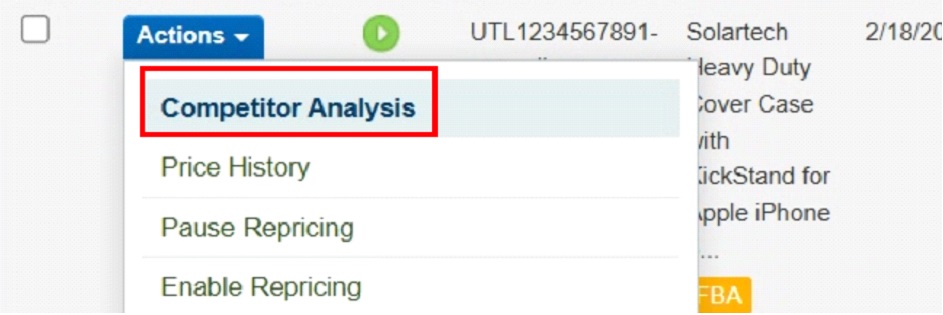
If you are currently using BQool Repricer, you can easily check your Buy Box status for each listing through the Competitor Analysis feature. Follow the steps below:
- On your Repricing Central, Go to the Listings Tab
- Click Active Listings
- Find the Actions tab in blue on the left-hand side
- Click on Competitor Analysis
- Look for the orange tag which indicates Buy Box ownership
Sponsored Brands
What Are Sponsored Brands?
Sponsored Brands are Amazon advertising placements, previously called Headline Search Ads, designed for brand-registered sellers who want to increase brand awareness and showcase their unique value proposition. These ads offer more customization than Sponsored Products and occupy prominent space on the search results page, making them highly effective at capturing shopper attention and driving conversions.
Where Do Sponsored Brands Appear?
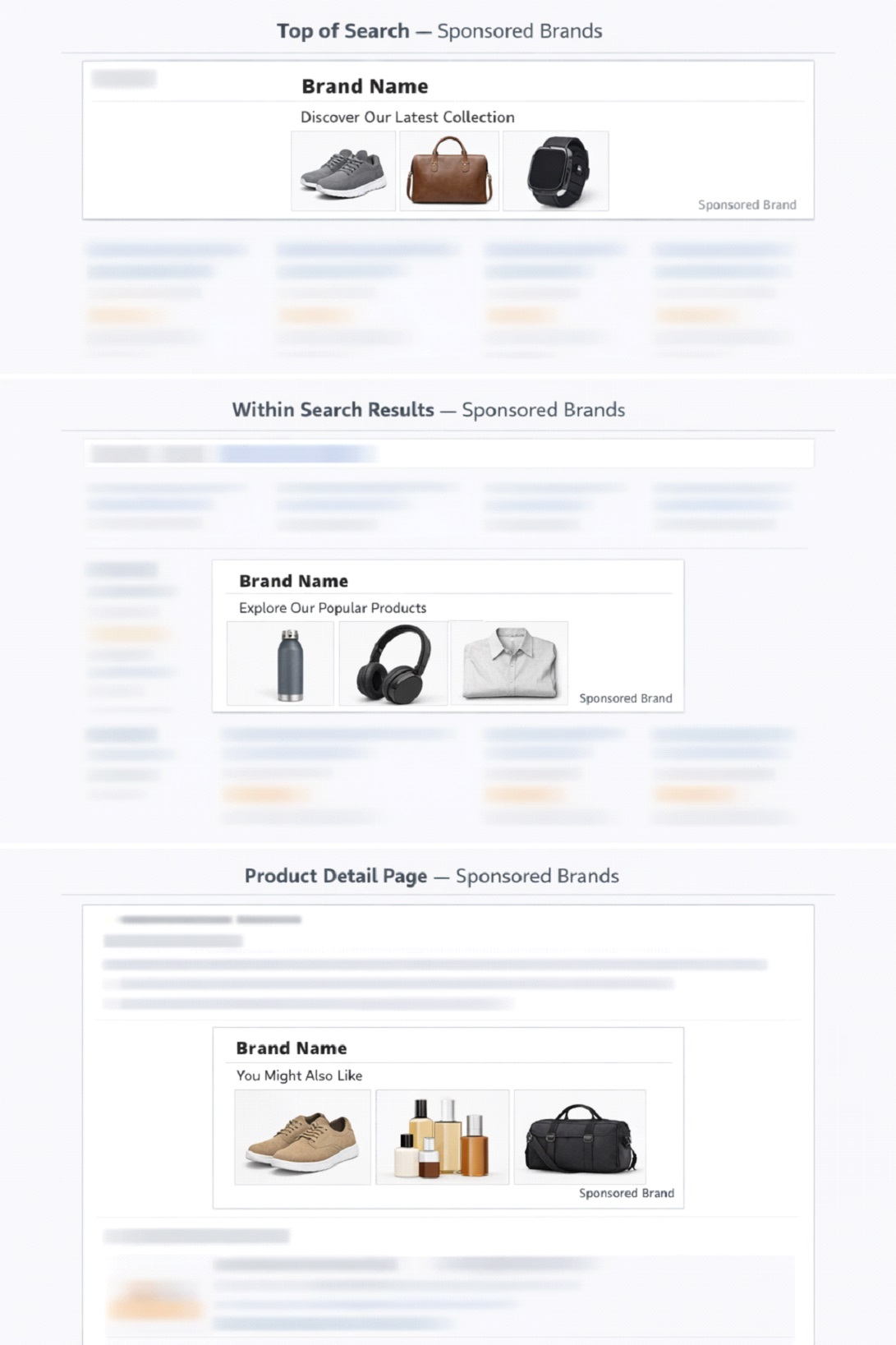
Sponsored Brand Ads often appear at the top of search results, though they also surface mid-page or on product detail pages. These positions are highly visible. There are three ad formats for Sponsored Brands, including product collection, store spotlight, and video ads.
Product Collection Ads Format
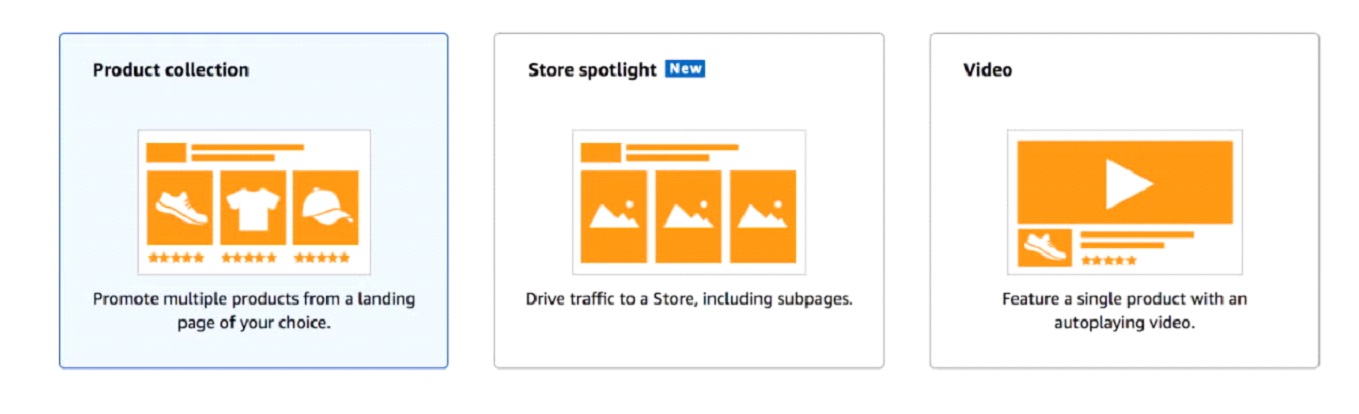
The Product Collection ad format allows sellers to showcase several products at once. With this format, sellers choose a main brand visual and direct shoppers to their Brand Store, which is a simple landing page that Amazon automatically generates, or a customized landing page designed by the seller.
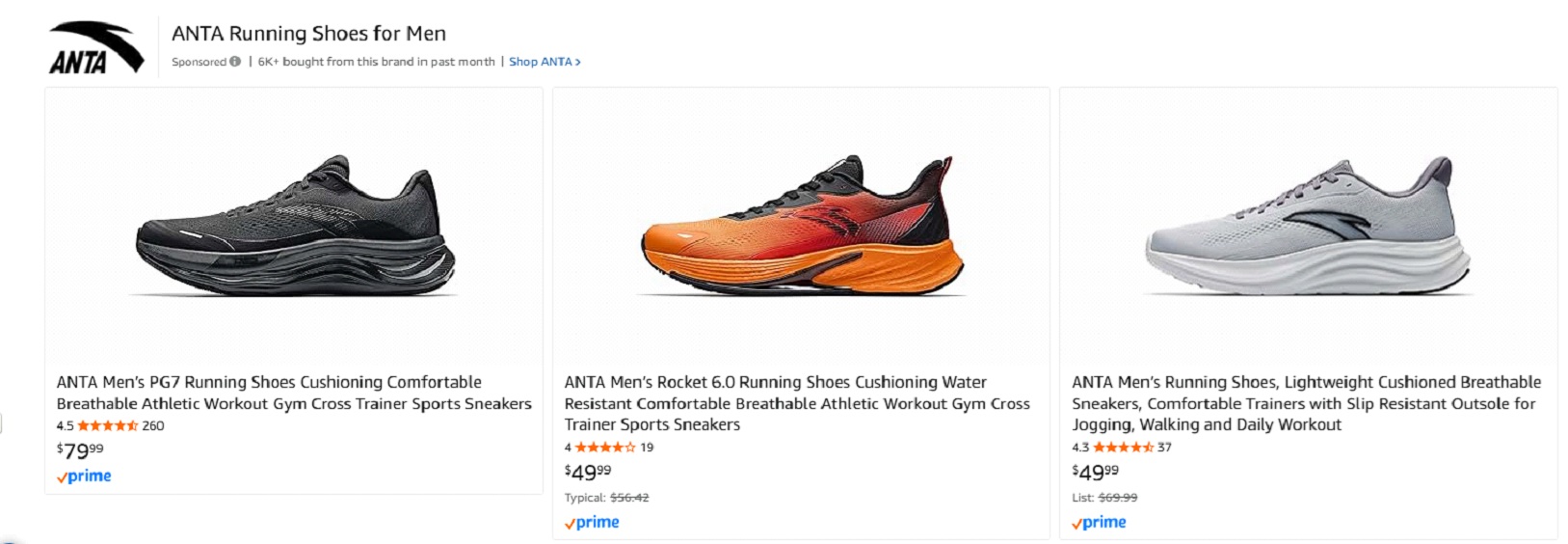
The auto-generated pages are product-focused, meaning each item is displayed with its image, title, price, reviews, and ratings, like what shoppers see in regular search results. This layout is often ideal for driving quick conversions.
Depending on your campaign goals, sellers can change the landing page used for this ad format, suitable for highlighting best sellers, introducing a new product line, or guiding shoppers to a curated product page. While this format offers the most flexibility, it also requires thoughtful planning to decide which products to feature and how to structure the landing page or supporting visuals.
So, which landing page should you choose?
When choosing between landing page options, there are several points to consider. A customized brand page allows you to showcase the uniqueness of your brand with strong visuals, but it may redirect the shopper’s journey by shifting their focus toward brand discovery rather than conversion. As the page offers more areas to explore, customers may be distracted from making a purchase.
On the other hand, directing customers to a product list page provides an experience like Amazon’s regular search results would narrow down their choices to a select group of products and keeps their attention on moving forward in the buying process, often making it easier for them to complete a purchase.
Store Spotlight Ads format
Store Spotlight allows sellers to direct customers to specific pages within their Amazon Brand Store, encouraging product discovery rather than quick conversions. To use this ad format, your Brand Store must contain at least four pages, and each page must feature at least one unique product. Unlike the Product Collection format, which highlights selected items, Store Spotlight allows you to showcase broader categories or sections of your brand using large, clickable images that lead shoppers to different store pages.
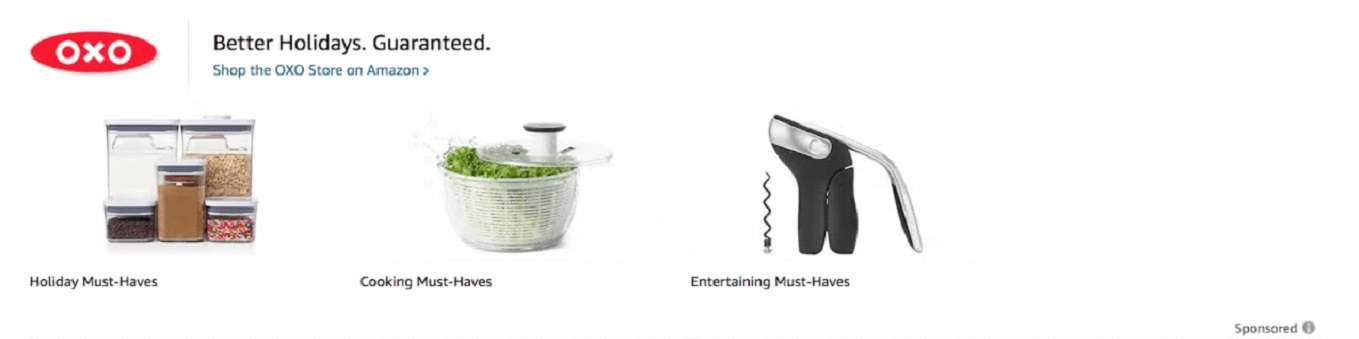
This format is especially useful for brands with larger inventories, multiple product lines, or well-organized categories that they want shoppers to explore. If your goal is to introduce customers to your full product ecosystem and encourage them to spend more time browsing your store, Store Spotlight is the recommended Sponsored Brands ad format.
Sponsored Brands Video Format
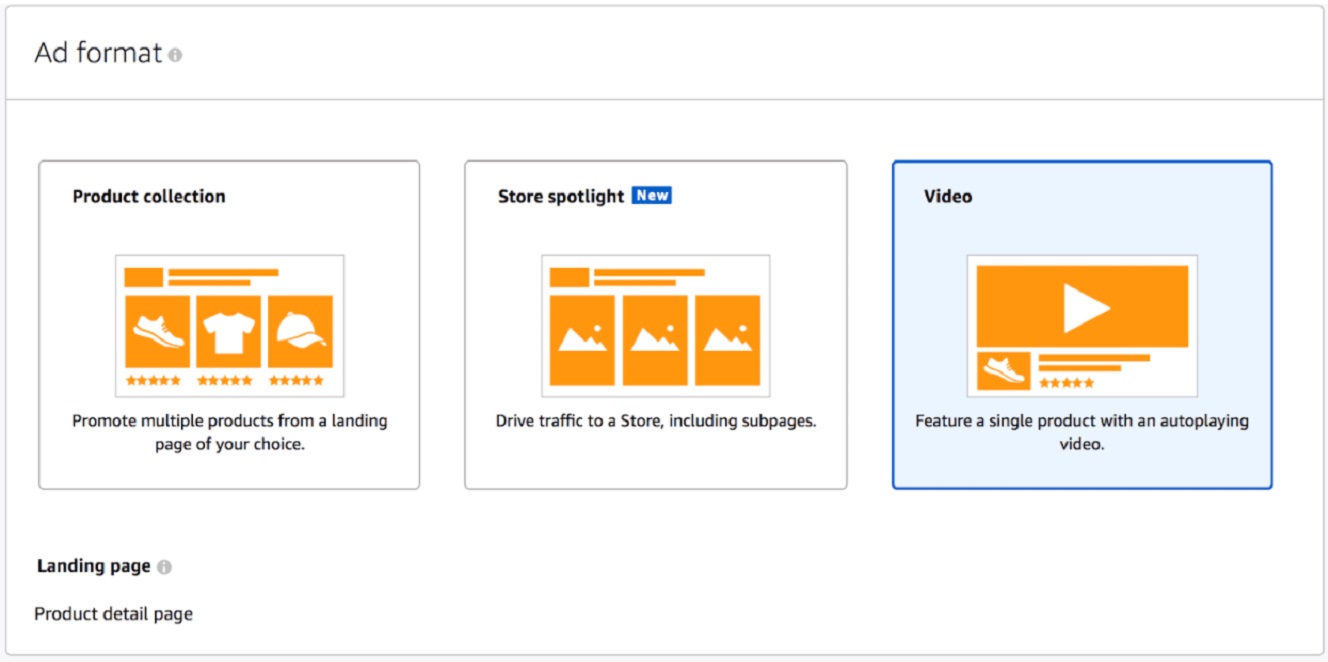
The final format available for Sponsored Brands is Video Ads, which are among the most prominent Sponsored Brand advertising options. This format enables sellers to create a 6–45 second product video that auto-plays silently as shoppers scroll past, making it a strong attention-grabber within an otherwise static search results page. According to Getida, Sponsored Brand Video Ads can increase product sales by up to 35%. Additionally, Perpetua reports that Sponsored Video Ads achieve twice the click-through rate of static Sponsored Brand Ads and deliver an average of 28–43% higher ROAS compared to Sponsored Brands Product Collection Ads.

These ads typically appear in the middle of search results pages and begin playing once at least half of the video player is visible on screen. Shoppers can choose to unmute the video to watch it with sound or read the included caption (if provided by the seller), which briefly highlights key supporting information.
Video ads are particularly effective because they allow sellers to showcase products in a realistic and engaging way. When executed well, they help build trust and confidence in shoppers as they evaluate a product. For detailed specifications on video ads, check out this page from Amazon.
Should You Use Sponsored Brands?
To use Sponsored Brands, sellers must have a Professional Seller account and be enrolled in Amazon Brand Registry. Brand registration requires submitting key business details such as your brand name and logo, along with a registered or pending trademark. For sellers who do not yet have these requirements in place, Amazon offers tools like an AI-powered brand name generator and an IP Accelerator program to help speed up the trademark and Brand Registry enrollment process.
Beyond being brand-registered, sellers should have an Amazon storefront with at least three sub-pages, and each such page should feature a unique product to prepare for the various ad formats available under Amazon Sponsored Brands.
How Much Does Sponsored Brands Cost?
Sponsored Brands use either a cost-per-click (CPC) pricing model, similar to Sponsored Products where you only pay whenever a shopper clicks on your ad, or a cost-per-thousand viewable impressions (vCPM) model.
With vCPM, sellers are charged for every 1,000 viewable impressions, regardless of whether shoppers click on the ad. Under the vCPM model, costs typically range from about $3 to $8 per 1,000 impressions, though rates can vary significantly by product category, with more competitive categories generally driving higher costs. vCPM works best for brands who would like to optimize for reach rather than conversions. Just like CPC, you are able to set the bid and daily budget for these ads.
What are the benefits of sponsored Brands?
The main advantage of Sponsored Brands over other ad types is their ability to build brand awareness. Sponsored Brands act as a long-term branding tool by showcasing your brand story, mission, and core value proposition. This helps customers remember your brand and develop trust, increasing the likelihood that they will search for your brand directly in the future.
Sponsored Brands also help your target audience better understand your products and support more informed purchase decisions. In addition, these ads can direct shoppers to your Amazon Store or custom landing pages, allowing you to promote multiple products at once, especially through the Product Spotlight format.
Finally, Sponsored Brand Ads occupy more space on search results pages, giving your brand greater visibility and a higher chance of capturing shopper attention.
Best Practices for Sponsored Brands
- Use performance data to continually optimize campaigns by reviewing Search Term Reports, refining keyword targeting, and removing irrelevant or low-performing terms.
- Track key engagement and efficiency metrics such as CTR, detail page views, CPC, and ACOS to ensure ads are driving relevant, cost-effective traffic.
- Test and optimize creative elements, including headlines, images, and video ads, to identify what resonates most with shoppers.
- Combine keyword and product targeting, using multiple match types, to balance reach and relevance across different shopper intents.
- Align keywords, ad messaging, and landing pages to deliver a consistent experience that supports higher conversions.
- Set clear budgets and campaign timelines, adjusting bids and spend regularly to maximize return on ad spend.
Sponsored Display
What Is Sponsored Display?
Sponsored Display ads allow sellers to target shoppers based on their interests and shopping behavior rather than specific keywords, while also enabling advertising both on and off Amazon. When this ad type is activated, shoppers who have previously searched for or viewed a product may see that product again in a Sponsored Display ad across Amazon pages, competitor listings, and third-party websites or apps. If the shopper clicks on the ad, they are redirected back to the original product listing.
Sponsored Display Targeting Options
- Product Targeting allows sellers to show ads on their own listings, competitor listings, and related categories, helping reach shoppers who are browsing similar or complementary products. Sellers can attract competitor traffic by offering incentives such as coupons or lower prices. This option is available to Vendors and Brand Registry enrolled third-party sellers.
- Views Remarketing enables sellers to retarget shoppers who viewed their product detail pages, or similar products and categories, within the last 30 days but did not make a purchase, making it more effective than targeting cold traffic. This option is also available to Vendors and Brand Registry enrolled third-party sellers.
Interest-Based Audiences help increase brand awareness by showing ads to new shoppers who have demonstrated interest in related products or categories. This targeting option is exclusive to Vendors.
Where Do Sponsored Display Ad Appear?
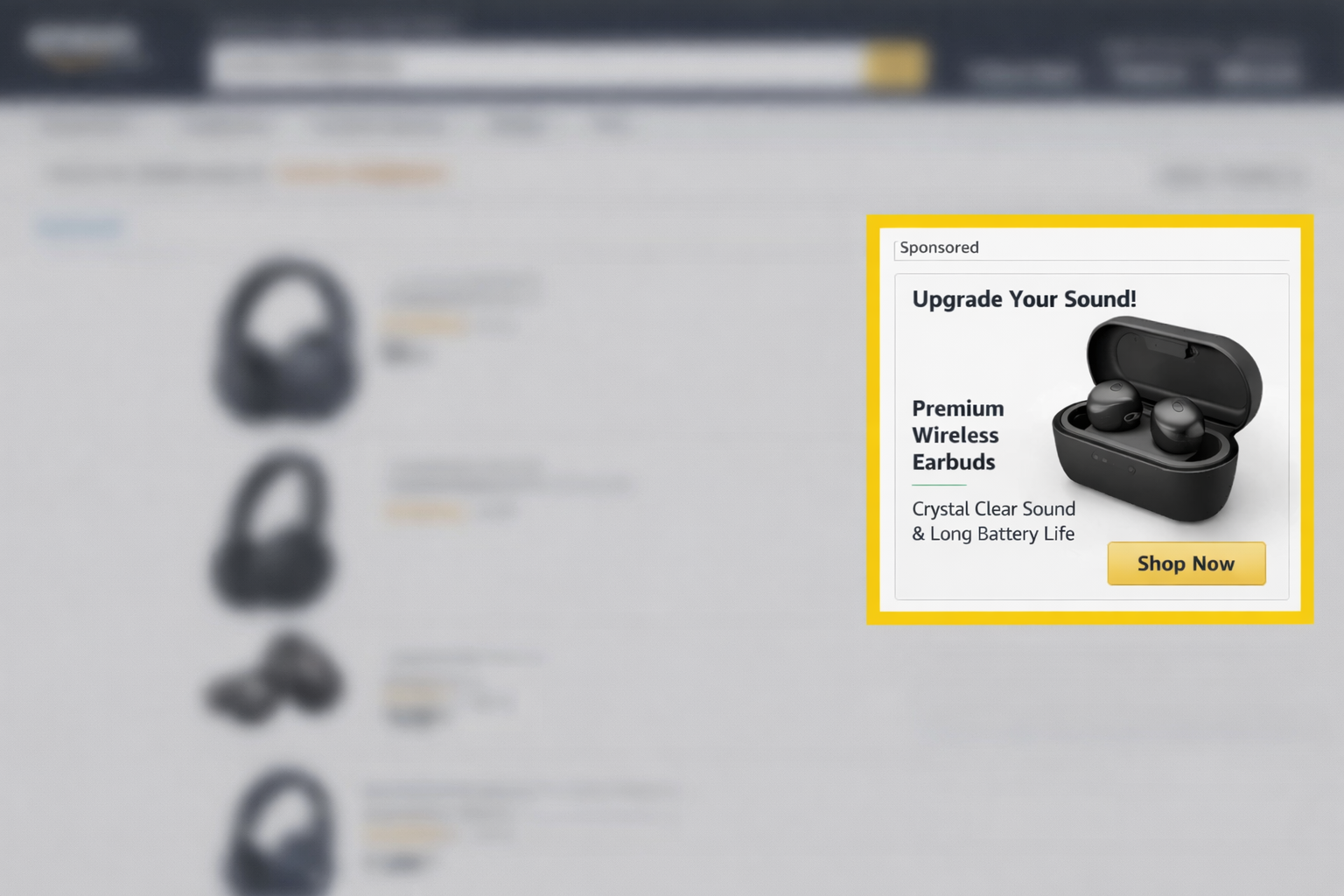
Sponsored Display ads can appear either on product detail pages within Amazon or in search results across desktop, mobile, and the Amazon app, or on third-party websites and apps in the U.S, depending on the selected targeting option.
Who Can Use Sponsored Display?
This ad is available to sellers enrolled in Amazon Brand Registry and amazon vendors.
How Much Does Sponsored Display Cost?
Like Sponsored Brands ads, Sponsored Display ads support both cost-per-click (CPC) and cost-per-thousand viewable impressions (vCPM), with no minimum campaign spend required. This flexibility allows advertisers to tailor campaigns to specific objectives, such as increasing brand awareness or driving higher product sales.
What are the Benefits of Sponsored Display ads?
Sponsored Display ads offer several key benefits for advertisers. By using audience-based targeting rather than keywords, they allow brands to reach shoppers based on their interests and shopping behavior. This makes Sponsored Display ads especially effective for defending product listings against competitors selling similar items and for reaching highly relevant audiences. In addition, these ads enable brands to re-engage shoppers who have previously viewed a product but did not purchase, encouraging them to return and complete their purchase. Sponsored Display ads can also reach new shoppers off Amazon through third-party websites and apps, helping to expand brand visibility. Overall, this ad format supports engagement across multiple stages of the customer buying journey, rather than focusing on a single point of interaction.
Best Practices
- Structure campaigns clearly and strategically: Use clear naming conventions (e.g., SD-Competitor-BrandName), create separate campaigns for each targeting type (views remarketing, product targeting, interests), and set appropriate daily budgets to maximize exposure and control spend.
- Choose the right targeting for your objective: Use views remarketing to re-engage shoppers who viewed but didn’t purchase, product targeting to defend listings or target competitors and complementary products, and interest-based audiences (Vendors only) to reach new shoppers.
- Optimize product listings before driving traffic: Ensure high-quality images, strong titles and bullet points, competitive pricing or coupons, and solid reviews, as Sponsored Display ads send traffic directly to product detail pages.
- Leverage high-intent placements: Focus on competitor listings and high-traffic product or category pages to capture shoppers who are close to making a purchase.
- Monitor performance and adjust regularly: Track CTR, CPC, conversions, and ACOS, refine bids and budgets, pause underperforming placements, and use Sponsored Display alongside Sponsored Products and Sponsored Brands for full-funnel coverage.
Which type of Sponsored Ads should I use?
The right Amazon ad type depends on your specific business goals and where your products are in their life cycle.
- Sponsored Products drive conversions, improve keyword rankings, and generate consistent sales, making them the best starting point for most sellers.
- Sponsored Brands help brand-registered sellers build awareness, promote multiple products, and strengthen brand identity using custom creatives and video.
- Sponsored Display re-engages interested shoppers, protects listings from competitors, and expands reach on and off Amazon through audience-based targeting. Many sellers combine all three to support visibility, conversions, and retargeting across the customer journey.
To quickly compare the benefits and best use cases of each ad type at a glance, check out this comparison table.
Conclusion
Understanding the types of Amazon ads available and how they fit into your business goals is an essential part of building long-term success on Amazon. When you pair the right ad strategy with optimized listings, competitive pricing, and consistent monitoring, you create a strong foundation for growth.
For many new Amazon sellers, navigating Amazon Ads can feel overwhelming. With multiple types of amazon ads that look similar on the surface but function differently, it can be hard to know which one to use, when to use it, and how each format supports visibility, conversions, or brand growth. If you are trying to understand the key differences between Amazon’s ad types and how they work, this guide breaks it down so you can choose the right ad type with confidence.
Overview
What Is Amazon Advertising?
Amazon Advertising is used by sellers and vendors to manage ads across the Amazon ecosystem. This means that sellers can advertise both on and off Amazon marketplace, however it is mainly used to drive sales on Amazon marketplace. There is a range of ad formats designed to help sellers place their products in front of shoppers who are browsing or actively searching for items that are like or exactly what they offer.
Amazon ads influence three important areas:
- Boost Visibility. Ads place your products in high traffic positions, allowing you to reach shoppers who might not find you through organic search. Since many sellers often offer similar products, newer listings or those with fewer reviews may appear deeper in the search results after the first page. Advertising helps your product surface higher up, increasing the chances that potential customers will see it.
- Improve Ranking. Paid traffic can help generate steady sales, which contributes to stronger organic rankings over time. As your sales increase, you also gain more opportunities to collect positive reviews, which further improves your visibility and credibility.
- Accelerate Growth. For new sellers who have recently launched products, Amazon ads provide a reliable stream of traffic that arrives much faster than waiting for organic momentum to build. This is valuable for sellers to quickly establish a positive reputation and gain trust from online shoppers.
However, each Amazon ad type serves a different purpose, so selecting the right format is important.
What Are the Types of Amazon Ads?
Amazon offers a variety of ad formats designed for different seller goals. The main types of Amazon ads include:
- Sponsored Products, the most popular ad type, which focuses on promoting individual product listings and focus on conversions per unit.
- Sponsored Brands which highlight your brand as a whole and the option to showcase a selection of products to increase visibility and brand awareness.
- Sponsored Display which uses audience and product-based targeting to re-engage shoppers who have shown interest in your products or target new, suitable customers.
Amazon Sponsored Products
What Are Sponsored Products?
Sponsored Ads are Amazon’s most used ad type, and consequently it has the highest ad spend, alongside the highest clicks and impressions. Sponsored Product ads show up more often compared to the other Amazon ad formats, appearing on organic search results and product pages. It highlights a single product, and once clicked, it leads shoppers straight to that product’s detail page.
Should You Use Sponsored Products?
Sponsored Products are well suited for nearly all Amazon sellers, especially those focused on driving conversions and improving keyword ranking. They are ideal for new product launches, seasonal pushes, and maintaining steady sales volume on core items. If your goal is to achieve a faster turnover for your inventory over a shorter period of time, this is the ad type to prioritize. This format is available to vendors and sellers with a professional seller account, making it a common starting point for new advertisers.
Where Do Sponsored Products Appear?
Sponsored Products ads make up the majority of ad placements on Amazon marketplace, appearing in several key locations where shoppers are actively browsing and making purchase decisions. Amazon names these locations, Top of Search (ToS) which are at the top row of search results, Rest of Seach (ROS) which are lower on the search result pages, and Product Detail Pages (PDPs), which are within the product detail pages itself. Amazon Sponsored Ads can appear both on and beyond Amazon, where Amazon-owned websites and third-party locations support Amazon Sponsored Ads.
How Are Sponsored Products Priced?
Sponsored Products run on a cost per click (CPC) auction model. You set the highest amount you are comfortable paying for a click, and Amazon will not exceed that number. The stronger your bid, the better your chances of winning ad placement. Amazon charges you only for the clicks your ads generate.
For example, if you set a daily budget of 10 dollars and each click costs 1 dollar, your ad would stop running for the day once you have received 10 clicks.
What are the benefits of Sponsored Products?
Sponsored Products can increase visibility quickly, help drive conversions, and support organic ranking through increased sales activity. This format is effective for both new product launches and ongoing sales optimization.
Beyond this, launching a Sponsored Products ad campaign can help sellers gather insights into their target market, and help to reach a more relevant audience with ease through customized target keywords.
Best Practices for Sponsored Products
Begin with automatic targeting to collect data, then transition into manual targeting for precision. Use negative keywords to avoid irrelevant clicks and ensure your listing quality and pricing are competitive before sending paid traffic.
Do Sponsored Products support video ad formats?
As of November 11, 2025, Amazon announced the launch of a new video format for Sponsored Products. This update gives sellers more creative control over how their products are presented to shoppers. Sellers can now upload one to five product feature videos for each ASIN and include a description for every feature. When shoppers click the ad, they are directed to the product detail page for more information.
According to available information, this video option becomes visible only after a campaign has been created, not during the initial setup process. Data on average CPC and overall performance is still limited, as the format is new and currently in Beta. Amazon is gradually rolling out access to seller accounts, so not all sellers will see this feature yet.
Overall, Sponsored Products are easy to set up, highly visible, and accessible to all sellers, which makes them a strong starting point for Amazon advertising. Although competition can be high, and Buy Box eligibility affects visibility, these challenges can be managed with good pricing, optimized listings, and smart targeting.
Why does the Buy Box affect the visibility of Amazon Ads?
The Buy Box directly impacts ad visibility on Amazon because Sponsored Product ads only appear when you win the Buy Box. If you do not own the Buy Box for a specific ASIN, your Sponsored Product ads will not be shown at all.
Some ad formats, such as certain Sponsored Brands and Sponsored Display ads, may still appear even if you don’t hold the Buy Box. However, losing the Buy Box generally means your ads disappear from search results, leading to lost impressions, traffic, and potential sales.
Because of this, it’s important to regularly monitor your listings and ensure that the ASINs you are advertising maintain Buy Box eligibility and ownership.
How to Check Buy Box Status in Seller Central
To check Buy Box eligibility and ownership in Seller Central:
- Go to Manage Inventory
- Click Preferences
- Enable the Buy Box Eligible column
This will allow you to quickly see which products are eligible for the Buy Box and help you make informed decisions about your advertising strategy.
How to Check Buy Box Status on BQool Repricer
If you are currently using BQool Repricer, you can easily check your Buy Box status for each listing through the Competitor Analysis feature. Follow the steps below:
- On your Repricing Central, Go to the Listings Tab
- Click Active Listings
- Find the Actions tab in blue on the left-hand side
- Click on Competitor Analysis
- Look for the orange tag which indicates Buy Box ownership
Sponsored Brands
What Are Sponsored Brands?
Sponsored Brands are Amazon advertising placements, previously called Headline Search Ads, designed for brand-registered sellers who want to increase brand awareness and showcase their unique value proposition. These ads offer more customization than Sponsored Products and occupy prominent space on the search results page, making them highly effective at capturing shopper attention and driving conversions.
Where Do Sponsored Brands Appear?
Sponsored Brand Ads often appear at the top of search results, though they also surface mid-page or on product detail pages. These positions are highly visible. There are three ad formats for Sponsored Brands, including product collection, store spotlight, and video ads.
Product Collection Ads Format
The Product Collection ad format allows sellers to showcase several products at once. With this format, sellers choose a main brand visual and direct shoppers to their Brand Store, which is a simple landing page that Amazon automatically generates, or a customized landing page designed by the seller.
The auto-generated pages are product-focused, meaning each item is displayed with its image, title, price, reviews, and ratings, like what shoppers see in regular search results. This layout is often ideal for driving quick conversions.
Depending on your campaign goals, sellers can change the landing page used for this ad format, suitable for highlighting best sellers, introducing a new product line, or guiding shoppers to a curated product page. While this format offers the most flexibility, it also requires thoughtful planning to decide which products to feature and how to structure the landing page or supporting visuals.
So, which landing page should you choose?
When choosing between landing page options, there are several points to consider. A customized brand page allows you to showcase the uniqueness of your brand with strong visuals, but it may redirect the shopper’s journey by shifting their focus toward brand discovery rather than conversion. As the page offers more areas to explore, customers may be distracted from making a purchase.
On the other hand, directing customers to a product list page provides an experience like Amazon’s regular search results would narrow down their choices to a select group of products and keeps their attention on moving forward in the buying process, often making it easier for them to complete a purchase.
Store Spotlight Ads format
Store Spotlight allows sellers to direct customers to specific pages within their Amazon Brand Store, encouraging product discovery rather than quick conversions. To use this ad format, your Brand Store must contain at least four pages, and each page must feature at least one unique product. Unlike the Product Collection format, which highlights selected items, Store Spotlight allows you to showcase broader categories or sections of your brand using large, clickable images that lead shoppers to different store pages.
This format is especially useful for brands with larger inventories, multiple product lines, or well-organized categories that they want shoppers to explore. If your goal is to introduce customers to your full product ecosystem and encourage them to spend more time browsing your store, Store Spotlight is the recommended Sponsored Brands ad format.
Sponsored Brands Video Format
The final format available for Sponsored Brands is Video Ads, which are among the most prominent Sponsored Brand advertising options. This format enables sellers to create a 6–45 second product video that auto-plays silently as shoppers scroll past, making it a strong attention-grabber within an otherwise static search results page. According to Getida, Sponsored Brand Video Ads can increase product sales by up to 35%. Additionally, Perpetua reports that Sponsored Video Ads achieve twice the click-through rate of static Sponsored Brand Ads and deliver an average of 28–43% higher ROAS compared to Sponsored Brands Product Collection Ads.
These ads typically appear in the middle of search results pages and begin playing once at least half of the video player is visible on screen. Shoppers can choose to unmute the video to watch it with sound or read the included caption (if provided by the seller), which briefly highlights key supporting information.
Video ads are particularly effective because they allow sellers to showcase products in a realistic and engaging way. When executed well, they help build trust and confidence in shoppers as they evaluate a product. For detailed specifications on video ads, check out this page from Amazon.
Should You Use Sponsored Brands?
To use Sponsored Brands, sellers must have a Professional Seller account and be enrolled in Amazon Brand Registry. Brand registration requires submitting key business details such as your brand name and logo, along with a registered or pending trademark. For sellers who do not yet have these requirements in place, Amazon offers tools like an AI-powered brand name generator and an IP Accelerator program to help speed up the trademark and Brand Registry enrollment process.
Beyond being brand-registered, sellers should have an Amazon storefront with at least three sub-pages, and each such page should feature a unique product to prepare for the various ad formats available under Amazon Sponsored Brands.
How Much Does Sponsored Brands Cost?
Sponsored Brands use either a cost-per-click (CPC) pricing model, similar to Sponsored Products where you only pay whenever a shopper clicks on your ad, or a cost-per-thousand viewable impressions (vCPM) model.
With vCPM, sellers are charged for every 1,000 viewable impressions, regardless of whether shoppers click on the ad. Under the vCPM model, costs typically range from about $3 to $8 per 1,000 impressions, though rates can vary significantly by product category, with more competitive categories generally driving higher costs. vCPM works best for brands who would like to optimize for reach rather than conversions. Just like CPC, you are able to set the bid and daily budget for these ads.
What are the benefits of sponsored Brands?
The main advantage of Sponsored Brands over other ad types is their ability to build brand awareness. Sponsored Brands act as a long-term branding tool by showcasing your brand story, mission, and core value proposition. This helps customers remember your brand and develop trust, increasing the likelihood that they will search for your brand directly in the future.
Sponsored Brands also help your target audience better understand your products and support more informed purchase decisions. In addition, these ads can direct shoppers to your Amazon Store or custom landing pages, allowing you to promote multiple products at once, especially through the Product Spotlight format.
Finally, Sponsored Brand Ads occupy more space on search results pages, giving your brand greater visibility and a higher chance of capturing shopper attention.
Best Practices for Sponsored Brands
- Use performance data to continually optimize campaigns by reviewing Search Term Reports, refining keyword targeting, and removing irrelevant or low-performing terms.
- Track key engagement and efficiency metrics such as CTR, detail page views, CPC, and ACOS to ensure ads are driving relevant, cost-effective traffic.
- Test and optimize creative elements, including headlines, images, and video ads, to identify what resonates most with shoppers.
- Combine keyword and product targeting, using multiple match types, to balance reach and relevance across different shopper intents.
- Align keywords, ad messaging, and landing pages to deliver a consistent experience that supports higher conversions.
- Set clear budgets and campaign timelines, adjusting bids and spend regularly to maximize return on ad spend.
Sponsored Display
What Is Sponsored Display?
Sponsored Display ads allow sellers to target shoppers based on their interests and shopping behavior rather than specific keywords, while also enabling advertising both on and off Amazon. When this ad type is activated, shoppers who have previously searched for or viewed a product may see that product again in a Sponsored Display ad across Amazon pages, competitor listings, and third-party websites or apps. If the shopper clicks on the ad, they are redirected back to the original product listing.
Sponsored Display Targeting Options
- Product Targeting allows sellers to show ads on their own listings, competitor listings, and related categories, helping reach shoppers who are browsing similar or complementary products. Sellers can attract competitor traffic by offering incentives such as coupons or lower prices. This option is available to Vendors and Brand Registry enrolled third-party sellers.
- Views Remarketing enables sellers to retarget shoppers who viewed their product detail pages, or similar products and categories, within the last 30 days but did not make a purchase, making it more effective than targeting cold traffic. This option is also available to Vendors and Brand Registry enrolled third-party sellers.
Interest-Based Audiences help increase brand awareness by showing ads to new shoppers who have demonstrated interest in related products or categories. This targeting option is exclusive to Vendors.
Where Do Sponsored Display Ad Appear?
Sponsored Display ads can appear either on product detail pages within Amazon or in search results across desktop, mobile, and the Amazon app, or on third-party websites and apps in the U.S, depending on the selected targeting option.
Who Can Use Sponsored Display?
This ad is available to sellers enrolled in Amazon Brand Registry and amazon vendors.
How Much Does Sponsored Display Cost?
Like Sponsored Brands ads, Sponsored Display ads support both cost-per-click (CPC) and cost-per-thousand viewable impressions (vCPM), with no minimum campaign spend required. This flexibility allows advertisers to tailor campaigns to specific objectives, such as increasing brand awareness or driving higher product sales.
What are the Benefits of Sponsored Display ads?
Sponsored Display ads offer several key benefits for advertisers. By using audience-based targeting rather than keywords, they allow brands to reach shoppers based on their interests and shopping behavior. This makes Sponsored Display ads especially effective for defending product listings against competitors selling similar items and for reaching highly relevant audiences. In addition, these ads enable brands to re-engage shoppers who have previously viewed a product but did not purchase, encouraging them to return and complete their purchase. Sponsored Display ads can also reach new shoppers off Amazon through third-party websites and apps, helping to expand brand visibility. Overall, this ad format supports engagement across multiple stages of the customer buying journey, rather than focusing on a single point of interaction.
Best Practices
- Structure campaigns clearly and strategically: Use clear naming conventions (e.g., SD-Competitor-BrandName), create separate campaigns for each targeting type (views remarketing, product targeting, interests), and set appropriate daily budgets to maximize exposure and control spend.
- Choose the right targeting for your objective: Use views remarketing to re-engage shoppers who viewed but didn’t purchase, product targeting to defend listings or target competitors and complementary products, and interest-based audiences (Vendors only) to reach new shoppers.
- Optimize product listings before driving traffic: Ensure high-quality images, strong titles and bullet points, competitive pricing or coupons, and solid reviews, as Sponsored Display ads send traffic directly to product detail pages.
- Leverage high-intent placements: Focus on competitor listings and high-traffic product or category pages to capture shoppers who are close to making a purchase.
- Monitor performance and adjust regularly: Track CTR, CPC, conversions, and ACOS, refine bids and budgets, pause underperforming placements, and use Sponsored Display alongside Sponsored Products and Sponsored Brands for full-funnel coverage.
Which type of Sponsored Ads should I use?
The right Amazon ad type depends on your specific business goals and where your products are in their life cycle.
- Sponsored Products drive conversions, improve keyword rankings, and generate consistent sales, making them the best starting point for most sellers.
- Sponsored Brands help brand-registered sellers build awareness, promote multiple products, and strengthen brand identity using custom creatives and video.
- Sponsored Display re-engages interested shoppers, protects listings from competitors, and expands reach on and off Amazon through audience-based targeting. Many sellers combine all three to support visibility, conversions, and retargeting across the customer journey.
To quickly compare the benefits and best use cases of each ad type at a glance, check out this comparison table.
Conclusion
Understanding the types of Amazon ads available and how they fit into your business goals is an essential part of building long-term success on Amazon. When you pair the right ad strategy with optimized listings, competitive pricing, and consistent monitoring, you create a strong foundation for growth.