What Is a Prep Center? FBA vs FBM Seller Needs Explained

Overview
- Why Do FBA & FBM Sellers Use Prep Centers?
- Should You Use a Prep Center for Amazon FBA or FBM?
- Does Using a Prep Center Save Money?
- What are the Pros and Cons of using a Prep Center?
- How do Amazon Prep Centers Work?
- What to Look for in a Prep Center
- Questions to Ask When Vetting a Prep Center
- Real Tips from Amazon Sellers Who Use Prep Centers
- Conclusion
Prep centers play a key role in helping Amazon sellers get their products ready for FBA. An Amazon prep center receives your inventory, gets it ready according to Amazonâs requirements, and ships it to Amazonâs fulfillment centers for you.
If you sell through FBA (Fulfilled by Amazon), your products must follow Amazonâs packing and labeling rules. Otherwise, Amazon may either reject, return or repackage your items, wasting valuable time and money.
To streamline your Amazon business and scale faster, itâs important to understand how fulfillment and prep centers work togetherâthis blog breaks down what prep centers do, how they help, whether theyâre worth it, and how to choose the right one. Youâll also get real seller tips about using prep centers!
Â
Why Do FBA & FBM Sellers Use Prep Centers?
Before your products get to an Amazon fulfillment center, they need to be ready to sell. That means every unit needs to meet Amazon’s packaging, labeling, and compliance standards. For sellers working with overseas manufacturers or tight schedules, this step can be a headache.
For sellers shipping inventory from overseas, import tariffs and customs duties are another consideration that can complicate logistics and eat into profits.
What happens if you don’t follow FBA’s product packaging requirements?
If your products donât meet Amazonâs packaging and prep standards, your shipment could be rejectedâor worse, sent back.
This can lead to extra fees, delays, and in some cases, even a suspended seller account.
If your items arenât properly prepared or labeled, Amazon may charge you a prep fee. And if they arrive with unsafe packaging, they may be refused, disposed of, and not reimbursed.
If Amazon decides to return your inventory, youâll also be responsible for return and shipping feesâwhich can quickly eat into your profits and disrupt your ability to fulfill orders.
Thatâs Where Amazon Prep Centers Come In
Prep centers act like your behind-the-scenes logistics team.
You ship inventory directly from your supplier to the prep center.
They check it, label it, bundle it, and pack itâall according to Amazonâs strict requirements.
Then they forward it to the fulfillment center on your behalf.
This setup is a lifesaver for growing sellers or those working with fragile, bulky, or multi-unit products.
By using a prep center, you avoid compliance issues, reduce the risk of delays, and keep those dreaded “stranded inventory” notices out of your Seller Central dashboard.
Should You Use a Prep Center for Amazon FBA or FBM?
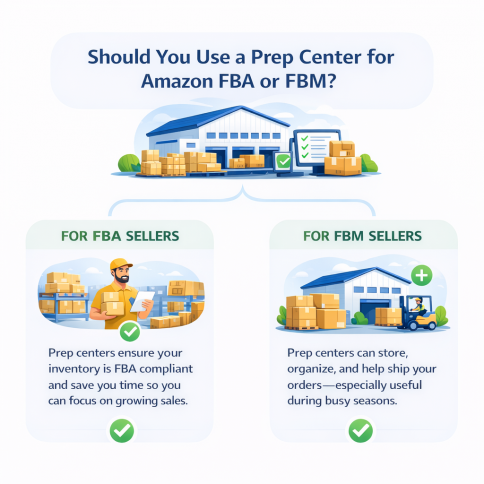
Prep centers can help both FBA and FBM sellers, but whether you use one depends on your sales volume, available time, and how much logistics you want to handle yourself.
If your business is growing and logistics are slowing you down, a prep center can make things run smootherâwhether youâre using FBA, FBM, or both.

For FBA Sellers:
FBA sellers benefit the most. Amazon has strict prep and packaging rules, and getting them wrong can lead to delays, extra fees, or rejected shipments.
Prep centers take care of receiving, labeling, packaging, and shipping your inventory to Amazonâso everything arrives fully compliant.
If you’re still prepping from home, it might feel manageable at first. But once sales pick up, packing hundreds of units gets overwhelming fast. A prep center saves you time and helps you focus on growing your business.
For FBM Sellers:
FBM sellers usually ship orders themselves, but prep centers can still helpâespecially during busy seasons or promotions.
They can store and organize your inventory, so itâs ready to ship when orders come in. Itâs a useful option if you’re short on space or need backup during spikes in demand
Â
Does Using a Prep Center Save Money?
Using a prep center to prepare your products would mean you don’t have to buy products to help you prepare inventory items.
A prep center provides essential packing supplies like boxes, poly bags, bubble wrap, and tape.
Hiring a prep-center would help you by providing storage space. This would save you alot of money on renting storage space units or warehouses.
The biggest benefit of using a prep center for Amazon is the time saved on preparing shipments.
Tip: Consider using prep centers that are located in tax-free states, who wonât charge for sales tac on purchases. These locations include Delaware, Alaska, Montana, New Hampshire, or Oregon.
Â
What are the Pros and Cons of using a Prep Center?
The Pros:
Prep centers help lower supply chain costs by handling packaging, labeling, and shipping more efficiently and affordably than in-house operations.
They also support faster growth by streamlining your fulfillment process, getting products to market quicker, and freeing up time to scale.
By managing the logistics, they reduce stress and act as a strategic partnerâhelping you stay organized, compliant, and focused on growing your business.
The Cons:
FBA prep companies can save you time, but you give up direct control of your inventory, which can slow down changes or special requests.
Some prep centers may also offer poor service or mishandle products, so itâs important to research and choose a reliable one.
“`
Â
How do Amazon Prep Centers Work?
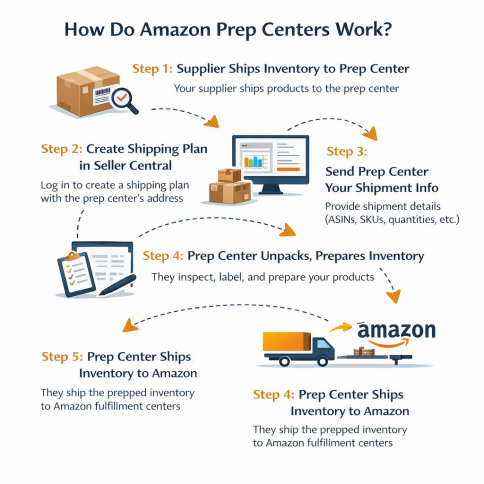
If you are thinking about using a prep center for the first time, here is what the process looks like from beginning to end. Moving boxes is not the only focus. Prep centers manage key logistics on your behalf and ensure your inventory complies with Amazonâs strict requirements.

Step 1: Your Supplier Ships Inventory to the Prep Center
Instead of sending your products directly to Amazon, you have your supplier ship them to the prep center. Most prep centers will give you a special code or suite number for your shipping label. This helps them identify your shipment when it arrives.
Tip: Always check with your supplier to make sure the label has your suite number. This small step can prevent confusion later.
Step 2: You Create a Shipping Plan in Seller Central
Next, log into your Amazon Seller Central account and create a shipping plan. Youâll add details like the number of units, product SKUs, and the prep centerâs address. This tells Amazon what inventory is coming and where itâs coming from.
Tip: Double-check your quantities and SKUs before submittingâthe prep center will match your plan to the shipment they receive.
Step 3: You Send the Prep Center Your Shipment Info
Next, youâll need to provide your prep center with the necessary shipment details. Most will have a form where you enter details like:
- Product ASINs, SKUs, or barcodes
- Quantities
- Any prep work needed (labeling, bagging, bundling)
- Tracking numbers from your supplier
- Expected delivery date
This helps the prep center plan their workflow and avoid delays.
Step 4: The Prep Center Does the Heavy Lifting
Once your shipment arrives, the prep team gets to work:
- They unpack and inspect your products for damage or missing items
- Label everything with Amazon barcodes or FNSKUs
- Pack and prepare according to FBA standards. This may include using bubble wrap, poly bags, or bundling several products together.
- For special items (like fragile or oversized products), they follow Amazonâs extra prep rules to keep everything compliant
Note: Not all prep centers offer the same services, so be sure they can handle your product type before sending inventory.
Step 5: Your Inventory Is Sent to Amazon
Once everything is prepared, the inventory is carefully packed for shipment. Then, the center sends your inventory to the Amazon fulfillment center. We complete this according to your shipping plan. From there, we check in your products and make them available for sale.
TIP: Many prep centers use Amazon-partnered carriers, which can speed up check-in times and reduce shipping costs.
Â
What to Look for in a Prep Center
A good prep center can help your business grow smoothly. It must have the capacity, reliability, and flexibility to support your workflow. Below are five key areas to focus on when choosing a prep center that fits your needs.
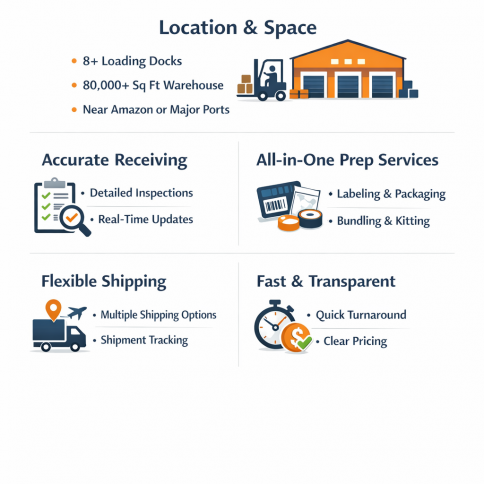
1. Location, Space
Your prep center should be physically equipped to handle your volumeâespecially during busy seasons. This includes:
- At least 8 loading docks to prevent receiving delays
- Forklifts and trained staff to manage large or palletized shipments
- 80,000+ sq ft of warehouse space for scalable storage
- A strategic locationâideally near Amazon fulfilment centers or major portsâto cut down transit time and reduce shipping costs
- Bonus: Some prep centers are located in tax-free states, which could save you money on inbound shipments
Choosing a well-equipped, well-placed center means fewer bottlenecks and faster turnaround from supplier to Amazon.
2. Accurate Receiving That You Can Track
Reliable receiving is non-negotiable. Your prep center should:
- Carefully inspect incoming inventory for damage, quantity mismatches, or labeling issues
- Offer customizable inspection options depending on your product type
- Provide real-time check-in updates or reports so you know exactly what arrived and when
- Handle both short- and long-term storage, with climate control available if needed
Solid receiving and storage processes ensure smoother Amazon check-ins and fewer unexpected issues.
3. All-in-One Prep Services
Make sure the center can handle the specific prep tasks your products require. Look for:
- Labeling (FNSKU barcodes, suffocation warnings, etc.) with 1â3 day turnaround
- Bundling, kitting, poly bagging, bubble wrapping, and carton forwarding
- Experience with fragile, oversized, or restricted items
- Willingness to take on custom or one-off projects
Not all prep centers offer the same service range, so be sure to match their capabilities with your SKUs and selling style.
4. Flexible Shipping Options
A good prep center offers multiple shipping and fulfilment options to support your strategy. Look for:
- Direct shipping to Amazon fulfilment centers
- Drip-feeding inventory to manage FBA storage fees
- Forwarding to multiple destinations, especially if you sell across marketplaces
- A tracking system or dashboard to monitor your shipments in real time
This kind of flexibility helps you stay lean while keeping products available to customers year-round.
5. Fast, Fair, and Transparent
Trust and responsiveness are just as important as logistics. Before you commit, make sure your prep center offers:
- Fast processing times, it’s best to aim for 1â3 business days max
- Transparent pricing, ideally with simple, tiered rates and no hidden fees
- Clear, reliable communication with a dedicated point of contact
- Proven reliabilityâread reviews, ask for referrals, and start with a small test shipment
A responsive, transparent partner can make all the differenceâespecially when something doesnât go as planned.
Â
Questions to Ask When Vetting a Prep Center
Now that youâve found a prep center you think might be good to work with. Below are some questions you may ask.
-
How long have you been in this business?
-
Do you sell on Amazon yourself?
-
How many clients do you currently work with?
-
Are you restricted or banned from working with any marketplaces or websites?
-
Walk me through your full prep processâfrom receiving inventory to shipping it out.
-
Do you intake returns? (Especially useful if Iâm running the business remotely)
-
Do you have a Minimum Order Quantity per ASIN?
-
What kind of tools or systems do you use to manage inventory?
-
How much would a standard package cost? Are there extra fees for multipacks?
-
Are there additional charges for certain product categories (e.g., Apparel & Shoes)?
-
Do you have any base charges or offer volume discounts?
-
Whatâs your billing cycle like?
-
What is your average turnaround time?
-
How will we communicate, and how often?
Â
Real Tips from Amazon Sellers Who Use Prep Centers
Hereâs what experienced sellers have learned from working with prep centers and how you can apply those lessons to grow your business faster and more efficiently.
Build the Right Partnership
- Direct Communication. Staying in touch with your prep center is key. Clear communication helps you understand their processes and quickly resolve any issues that come up.
- Personalized Service. Smaller prep centers often give more tailored support. This can be a big plus if your products need special handling or attention.
- Vetting Prep Centers. Donât rush the decision. Check reviews, ask for referrals, and test their service with a small shipment first.
- Avoiding Amazonâs Prep Services. While Amazonâs built-in service might seem easier, it can lead to labeling mistakes and delays. Many sellers find third-party prep centers more reliable and accountable.
Plan for Costs, Requirements & Risk
- Cost-Effectiveness. Make sure the service fits your budget and sales volume. High-volume sellers can often negotiate better rates.
- Special Discounts. Some prep centers offer promotions or first-time discounts. Take advantage of these to reduce costs upfront.
- Minimum Requirements. Most prep centers have order minimums or monthly fees. Check the fine print before committing.
- Handling Inventory Risks. Prep centers arenât immune to delays or lost shipments. Have a backup plan and clear policies in place.
Understand the Process & Optimize Workflow
- Efficient Workflow. Know how the center handles receiving, inspecting, labeling, and shipping. Use tracking tools or software to stay on top of things.
- Managing Returns. Clarify how returns are processedâespecially for FBM orders, where youâll need a separate workflow from FBA returns.
Use Your Time to Grow
- Scaling Your Business. Outsourcing prep frees up time and energy. Sellers often use that extra time to source more products, launch new SKUs, or expand to other marketplaces.
- Utilizing Free Time. Donât let the time saved go to waste. Use it strategically to grow your brand or improve other areas of your business.
- Focus on Business Growth. Prep centers take logistics off your plate so you can focus on the big pictureâlike scaling your operations or boosting profit margins.
đ„ Watch this video for a walk through of an Amazon fulfillment center
Conclusion
Amazon prep centers play a vital role in helping FBA and FBM sellers save time, reduce errors, and scale more efficiently. Whether you’re managing growing order volumes or simply tired of handling prep tasks yourself, outsourcing this part of your workflow can free up your time and streamline your business.
That said, prep centers arenât one-size-fits-all. Choosing the right partnerâone that fits your product type, sales volume, and operational needsâcan make all the difference. With the right prep center in place, youâll spend less time worrying about logistics and more time growing your business.
If youâre ready to take the next step, start by reviewing your current workflow, testing a reputable prep center, and looking for providers that offer the flexibility, transparency, and service your business needs to succeed.
Looking for 3PL services? Sign up for West Coast Prep & 3PL and get up to 20% Off Prep Services for 3 Months! Just mention BQool đ
BQool Repricer’s AI Deluxe Plan includes:
â Access 100 AI-Listings (2x more than Basic)
â AI Match Profit Strategies to boost margins
â Price Looping Feature for even higher profits
â Reprice based on Inventory Age
â Reprice using Historical Days of Supply & Avoid Low Inventory Fees
â Optimize for Sell-Through Rate
â Optimize for Suppressed Boy Box
â Advanced FBA/FBM Conditions
â Auto-Switch Between Conditions âŠall powered by our AI + Conditional Repricer!

Overview
- Why Do FBA & FBM Sellers Use Prep Centers?
- Should You Use a Prep Center for Amazon FBA or FBM?
- Does Using a Prep Center Save Money?
- What are the Pros and Cons of using a Prep Center?
- How do Amazon Prep Centers Work?
- What to Look for in a Prep Center
- Questions to Ask When Vetting a Prep Center
- Real Tips from Amazon Sellers Who Use Prep Centers
- Conclusion
Prep centers play a key role in helping Amazon sellers get their products ready for FBA. An Amazon prep center receives your inventory, gets it ready according to Amazonâs requirements, and ships it to Amazonâs fulfillment centers for you.
If you sell through FBA (Fulfilled by Amazon), your products must follow Amazonâs packing and labeling rules. Otherwise, Amazon may either reject, return or repackage your items, wasting valuable time and money.
To streamline your Amazon business and scale faster, itâs important to understand how fulfillment and prep centers work togetherâthis blog breaks down what prep centers do, how they help, whether theyâre worth it, and how to choose the right one. Youâll also get real seller tips about using prep centers!
Why Do FBA & FBM Sellers Use Prep Centers?
Before your products get to an Amazon fulfillment center, they need to be ready to sell. That means every unit needs to meet Amazon’s packaging, labeling, and compliance standards. For sellers working with overseas manufacturers or tight schedules, this step can be a headache.
For sellers shipping inventory from overseas, import tariffs and customs duties are another consideration that can complicate logistics and eat into profits.
What happens if you don’t follow FBA’s product packaging requirements?
If your products donât meet Amazonâs packaging and prep standards, your shipment could be rejectedâor worse, sent back.
This can lead to extra fees, delays, and in some cases, even a suspended seller account.
If your items arenât properly prepared or labeled, Amazon may charge you a prep fee. And if they arrive with unsafe packaging, they may be refused, disposed of, and not reimbursed.
If Amazon decides to return your inventory, youâll also be responsible for return and shipping feesâwhich can quickly eat into your profits and disrupt your ability to fulfill orders.
Thatâs Where Amazon Prep Centers Come In
Prep centers act like your behind-the-scenes logistics team.
You ship inventory directly from your supplier to the prep center.
They check it, label it, bundle it, and pack itâall according to Amazonâs strict requirements.
Then they forward it to the fulfillment center on your behalf.
This setup is a lifesaver for growing sellers or those working with fragile, bulky, or multi-unit products.
By using a prep center, you avoid compliance issues, reduce the risk of delays, and keep those dreaded “stranded inventory” notices out of your Seller Central dashboard.
Should You Use a Prep Center for Amazon FBA or FBM?
Prep centers can help both FBA and FBM sellers, but whether you use one depends on your sales volume, available time, and how much logistics you want to handle yourself.
If your business is growing and logistics are slowing you down, a prep center can make things run smootherâwhether youâre using FBA, FBM, or both.

For FBA Sellers:
FBA sellers benefit the most. Amazon has strict prep and packaging rules, and getting them wrong can lead to delays, extra fees, or rejected shipments.
Prep centers take care of receiving, labeling, packaging, and shipping your inventory to Amazonâso everything arrives fully compliant.
If you’re still prepping from home, it might feel manageable at first. But once sales pick up, packing hundreds of units gets overwhelming fast. A prep center saves you time and helps you focus on growing your business.
For FBM Sellers:
FBM sellers usually ship orders themselves, but prep centers can still helpâespecially during busy seasons or promotions.
They can store and organize your inventory, so itâs ready to ship when orders come in. Itâs a useful option if you’re short on space or need backup during spikes in demand
Does Using a Prep Center Save Money?
Using a prep center to prepare your products would mean you don’t have to buy products to help you prepare inventory items.
A prep center provides essential packing supplies like boxes, poly bags, bubble wrap, and tape.
Hiring a prep-center would help you by providing storage space. This would save you alot of money on renting storage space units or warehouses.
The biggest benefit of using a prep center for Amazon is the time saved on preparing shipments.
Tip: Consider using prep centers that are located in tax-free states, who wonât charge for sales tac on purchases. These locations include Delaware, Alaska, Montana, New Hampshire, or Oregon.
What are the Pros and Cons of using a Prep Center?
The Pros:
Prep centers help lower supply chain costs by handling packaging, labeling, and shipping more efficiently and affordably than in-house operations.
They also support faster growth by streamlining your fulfillment process, getting products to market quicker, and freeing up time to scale.
By managing the logistics, they reduce stress and act as a strategic partnerâhelping you stay organized, compliant, and focused on growing your business.
The Cons:
FBA prep companies can save you time, but you give up direct control of your inventory, which can slow down changes or special requests.
Some prep centers may also offer poor service or mishandle products, so itâs important to research and choose a reliable one.
“`
How do Amazon Prep Centers Work?
If you are thinking about using a prep center for the first time, here is what the process looks like from beginning to end. Moving boxes is not the only focus. Prep centers manage key logistics on your behalf and ensure your inventory complies with Amazonâs strict requirements.

Step 1: Your Supplier Ships Inventory to the Prep Center
Instead of sending your products directly to Amazon, you have your supplier ship them to the prep center. Most prep centers will give you a special code or suite number for your shipping label. This helps them identify your shipment when it arrives.
Tip: Always check with your supplier to make sure the label has your suite number. This small step can prevent confusion later.
Step 2: You Create a Shipping Plan in Seller Central
Next, log into your Amazon Seller Central account and create a shipping plan. Youâll add details like the number of units, product SKUs, and the prep centerâs address. This tells Amazon what inventory is coming and where itâs coming from.
Tip: Double-check your quantities and SKUs before submittingâthe prep center will match your plan to the shipment they receive.
Step 3: You Send the Prep Center Your Shipment Info
Next, youâll need to provide your prep center with the necessary shipment details. Most will have a form where you enter details like:
- Product ASINs, SKUs, or barcodes
- Quantities
- Any prep work needed (labeling, bagging, bundling)
- Tracking numbers from your supplier
- Expected delivery date
This helps the prep center plan their workflow and avoid delays.
Step 4: The Prep Center Does the Heavy Lifting
Once your shipment arrives, the prep team gets to work:
- They unpack and inspect your products for damage or missing items
- Label everything with Amazon barcodes or FNSKUs
- Pack and prepare according to FBA standards. This may include using bubble wrap, poly bags, or bundling several products together.
- For special items (like fragile or oversized products), they follow Amazonâs extra prep rules to keep everything compliant
Note: Not all prep centers offer the same services, so be sure they can handle your product type before sending inventory.
Step 5: Your Inventory Is Sent to Amazon
Once everything is prepared, the inventory is carefully packed for shipment. Then, the center sends your inventory to the Amazon fulfillment center. We complete this according to your shipping plan. From there, we check in your products and make them available for sale.
TIP: Many prep centers use Amazon-partnered carriers, which can speed up check-in times and reduce shipping costs.
What to Look for in a Prep Center
A good prep center can help your business grow smoothly. It must have the capacity, reliability, and flexibility to support your workflow. Below are five key areas to focus on when choosing a prep center that fits your needs.

1. Location, Space
Your prep center should be physically equipped to handle your volumeâespecially during busy seasons. This includes:
- At least 8 loading docks to prevent receiving delays
- Forklifts and trained staff to manage large or palletized shipments
- 80,000+ sq ft of warehouse space for scalable storage
- A strategic locationâideally near Amazon fulfilment centers or major portsâto cut down transit time and reduce shipping costs
- Bonus: Some prep centers are located in tax-free states, which could save you money on inbound shipments
Choosing a well-equipped, well-placed center means fewer bottlenecks and faster turnaround from supplier to Amazon.
2. Accurate Receiving That You Can Track
Reliable receiving is non-negotiable. Your prep center should:
- Carefully inspect incoming inventory for damage, quantity mismatches, or labeling issues
- Offer customizable inspection options depending on your product type
- Provide real-time check-in updates or reports so you know exactly what arrived and when
- Handle both short- and long-term storage, with climate control available if needed
Solid receiving and storage processes ensure smoother Amazon check-ins and fewer unexpected issues.
3. All-in-One Prep Services
Make sure the center can handle the specific prep tasks your products require. Look for:
- Labeling (FNSKU barcodes, suffocation warnings, etc.) with 1â3 day turnaround
- Bundling, kitting, poly bagging, bubble wrapping, and carton forwarding
- Experience with fragile, oversized, or restricted items
- Willingness to take on custom or one-off projects
Not all prep centers offer the same service range, so be sure to match their capabilities with your SKUs and selling style.
4. Flexible Shipping Options
A good prep center offers multiple shipping and fulfilment options to support your strategy. Look for:
- Direct shipping to Amazon fulfilment centers
- Drip-feeding inventory to manage FBA storage fees
- Forwarding to multiple destinations, especially if you sell across marketplaces
- A tracking system or dashboard to monitor your shipments in real time
This kind of flexibility helps you stay lean while keeping products available to customers year-round.
5. Fast, Fair, and Transparent
Trust and responsiveness are just as important as logistics. Before you commit, make sure your prep center offers:
- Fast processing times, it’s best to aim for 1â3 business days max
- Transparent pricing, ideally with simple, tiered rates and no hidden fees
- Clear, reliable communication with a dedicated point of contact
- Proven reliabilityâread reviews, ask for referrals, and start with a small test shipment
A responsive, transparent partner can make all the differenceâespecially when something doesnât go as planned.
Questions to Ask When Vetting a Prep Center
Now that youâve found a prep center you think might be good to work with. Below are some questions you may ask.
-
How long have you been in this business?
-
Do you sell on Amazon yourself?
-
How many clients do you currently work with?
-
Are you restricted or banned from working with any marketplaces or websites?
-
Walk me through your full prep processâfrom receiving inventory to shipping it out.
-
Do you intake returns? (Especially useful if Iâm running the business remotely)
-
Do you have a Minimum Order Quantity per ASIN?
-
What kind of tools or systems do you use to manage inventory?
-
How much would a standard package cost? Are there extra fees for multipacks?
-
Are there additional charges for certain product categories (e.g., Apparel & Shoes)?
-
Do you have any base charges or offer volume discounts?
-
Whatâs your billing cycle like?
-
What is your average turnaround time?
-
How will we communicate, and how often?
Real Tips from Amazon Sellers Who Use Prep Centers
Hereâs what experienced sellers have learned from working with prep centers and how you can apply those lessons to grow your business faster and more efficiently.
Build the Right Partnership
- Direct Communication. Staying in touch with your prep center is key. Clear communication helps you understand their processes and quickly resolve any issues that come up.
- Personalized Service. Smaller prep centers often give more tailored support. This can be a big plus if your products need special handling or attention.
- Vetting Prep Centers. Donât rush the decision. Check reviews, ask for referrals, and test their service with a small shipment first.
- Avoiding Amazonâs Prep Services. While Amazonâs built-in service might seem easier, it can lead to labeling mistakes and delays. Many sellers find third-party prep centers more reliable and accountable.
Plan for Costs, Requirements & Risk
- Cost-Effectiveness. Make sure the service fits your budget and sales volume. High-volume sellers can often negotiate better rates.
- Special Discounts. Some prep centers offer promotions or first-time discounts. Take advantage of these to reduce costs upfront.
- Minimum Requirements. Most prep centers have order minimums or monthly fees. Check the fine print before committing.
- Handling Inventory Risks. Prep centers arenât immune to delays or lost shipments. Have a backup plan and clear policies in place.
Understand the Process & Optimize Workflow
- Efficient Workflow. Know how the center handles receiving, inspecting, labeling, and shipping. Use tracking tools or software to stay on top of things.
- Managing Returns. Clarify how returns are processedâespecially for FBM orders, where youâll need a separate workflow from FBA returns.
Use Your Time to Grow
- Scaling Your Business. Outsourcing prep frees up time and energy. Sellers often use that extra time to source more products, launch new SKUs, or expand to other marketplaces.
- Utilizing Free Time. Donât let the time saved go to waste. Use it strategically to grow your brand or improve other areas of your business.
- Focus on Business Growth. Prep centers take logistics off your plate so you can focus on the big pictureâlike scaling your operations or boosting profit margins.
đ„ Watch this video for a walk through of an Amazon fulfillment center
Conclusion
Amazon prep centers play a vital role in helping FBA and FBM sellers save time, reduce errors, and scale more efficiently. Whether you’re managing growing order volumes or simply tired of handling prep tasks yourself, outsourcing this part of your workflow can free up your time and streamline your business.
That said, prep centers arenât one-size-fits-all. Choosing the right partnerâone that fits your product type, sales volume, and operational needsâcan make all the difference. With the right prep center in place, youâll spend less time worrying about logistics and more time growing your business.
If youâre ready to take the next step, start by reviewing your current workflow, testing a reputable prep center, and looking for providers that offer the flexibility, transparency, and service your business needs to succeed.
Looking for 3PL services? Sign up for West Coast Prep & 3PL and get up to 20% Off Prep Services for 3 Months! Just mention BQool đ
BQool Repricer’s AI Deluxe Plan includes:
â Access 100 AI-Listings (2x more than Basic)
â AI Match Profit Strategies to boost margins
â Price Looping Feature for even higher profits
â Reprice based on Inventory Age
â Reprice using Historical Days of Supply & Avoid Low Inventory Fees
â Optimize for Sell-Through Rate
â Optimize for Suppressed Boy Box
â Advanced FBA/FBM Conditions
â Auto-Switch Between Conditions âŠall powered by our AI + Conditional Repricer!