Prime Day 2026 runs June 23–26, four full days of the biggest shopping event of the year on Amazon.
Here is a Prime Day Ads Seller FAQ on Amazon Prime Day ads for private label sellers: what to plan, what to watch, and where most sellers slip up.
Overview
- Key takeaways
- Should I increase my ad spend for Prime Day?
- What’s the best Prime Day advertising strategy?
- What’s the biggest Prime Day advertising mistake?
- How do I avoid burning through my Prime Day ad budget too early?
- Why does my Prime Day revenue grow but my profit shrink?
- What ad goal should I set before Prime Day starts?
- How can BQool help with Prime Day advertising?
- Quick Prime Day checklist
Key takeaways
- Prime Day 2026 runs June 23–26, four full days of peak traffic and competition.
- More ad spend doesn’t automatically mean more profit — strategy beats budget.
- Two biggest mistakes: running out of budget too early, and chasing sales over profit.
Should I increase my ad spend for Prime Day?
It depends on your goal and your product. Spending more makes sense when:
- You’re launching a newer product and need reviews and rank momentum.
- You’re a category bestseller defending top keywords from competitors.
- You have margin headroom even after Prime Day discounts.
Spending more is risky when:
- Your product isn’t price-elastic (discounts don’t meaningfully move volume).
- You’re already running on thin margins.
- You’re scaling spend on every ASIN instead of picking winners.
What’s the best Prime Day advertising strategy?
There isn’t a single one — different products need different approaches. A quick framework:
- New launches: higher bids, looser ACoS, aggressive growth.
- Established bestsellers: defensive bidding, protect top keywords, control ACoS.
- Mid-tier products with potential: careful allocation, scale only what converts.
- Low-margin or slow-movers: reduce spend. Don’t subsidize losers during peak hours.
The “more ads on everything” approach is one of the fastest ways to lose money on Prime Day.
What’s the biggest Prime Day advertising mistake?
Running out of budget by lunchtime — and missing the highest-converting hours later in the day.
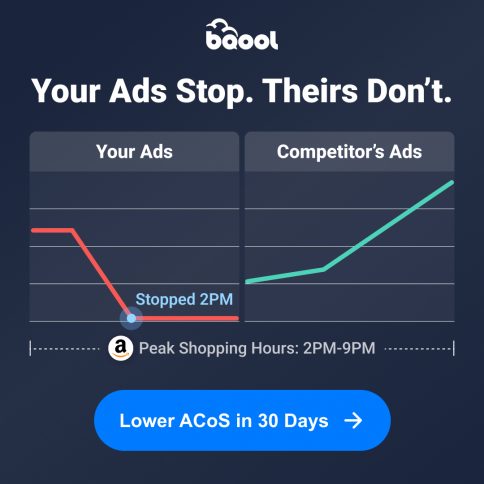
This happens because:
- Click volume spikes early; budgets evaporate fast.
- Sellers use normal-day budget caps for a peak-day event.
- Manual bidding can’t react to fast-changing CPCs.
With Prime Day stretched to four days in 2026, the same risk applies across the event — burn too hot on Day 1 and you’ll be invisible by Day 3.
How do I avoid burning through my Prime Day ad budget too early?
- Size daily budgets for Prime Day traffic, not a typical Tuesday.
- Pace spend across the day and across all four days of the event.
- Use automated budget tools that adjust based on real-time performance.
- Pull back spend on your lowest-priority campaigns first when limits are tight.
To learn more, check out this blog on how much to spend on Amazon Ads.
Why does my Prime Day revenue grow but my profit shrink?
You’re getting squeezed from both sides:
- Lower prices + higher ad spend = compressed margins twice over.
- Broad-match campaigns scoop up irrelevant clicks during peak traffic surges.
- Gross sales hides the real story; profit metrics don’t.
Track these during Prime Day, not just revenue:
- TACoS — is total ad cost rising faster than revenue?
- Contribution margin per unit — what’s actually left after fees, ads, and discounts?
- Inventory burn rate — are you firesaleing slow movers at a loss?
What ad goal should I set before Prime Day starts?
Pick one per product (or product group). Don’t try to do all four at once:
- Aggressive growth — new launches, category expansion.
- Defensive scaling — protect established winners.
- Inventory clearance — slow-movers or seasonal closeouts.
- Profit optimization — tight ACoS, high-margin focus.
Without a clear goal, “more sales” becomes a wish, not a plan.
How can BQool help with Prime Day advertising?
The hard part isn’t knowing what to do — it’s executing across dozens of campaigns in real time while CPCs swing and your inbox is on fire. BQool handles the layer below the strategy:
- AI-Bidding — dynamic bid adjustments based on real conversion data.
- Auto-Budgeting — pacing across hours and across all four days, no manual babysitting.
- Performance analytics — see which ASINs are worth scaling and which to pull back on.
Quick Prime Day checklist
✅ Clear goal set per product
✅ Budgets sized for peak traffic, not normal days
✅ Pacing built in for all four days
✅ Profit metrics tracked, not just sales
Get those four right and Prime Day stops being a stressful budget race — it becomes a profitable accelerator for the brand you’re building.