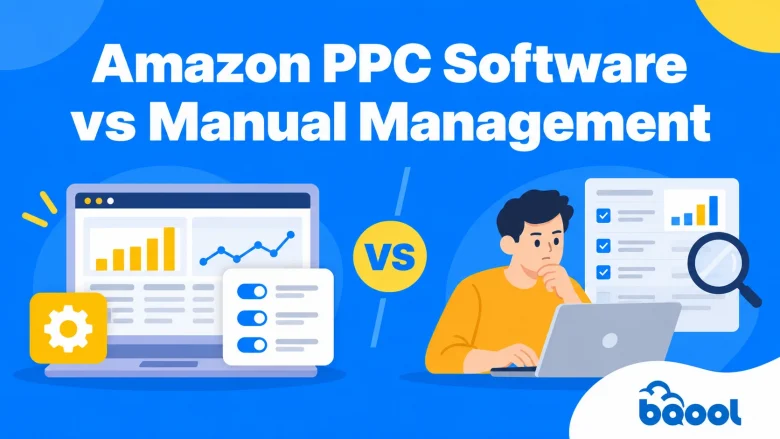
Manual Amazon PPC management can work well when the workload is manageable and human review still adds value.
The problem starts when recurring PPC work becomes harder to execute consistently.
More products create more campaigns. More campaigns create more targets, search terms, budgets, and decisions. Eventually, the time required to manage PPC starts growing faster than the value of doing every task manually.
But scale is only part of the decision.
Some PPC decisions still depend on information outside the ad data, such as inventory, pricing, promotions, product launches, or broader business priorities.
So the question is not whether automation is always better than manual management.
It is:
Which PPC decisions are worth automating, and where is human judgment still more valuable?
Overview
- What Does Manual Amazon PPC Management Mean?
- When Manual PPC Management Still Makes Sense
- What Changes as the Account Grows?
- 5 Signs Manual PPC Management Is Becoming a Bottleneck
- Manual PPC vs PPC Software: The Real Trade-Off
- What Should Software Take Off Your Plate?
- What Should Stay Manual?
- When Should You Start Automating Manual PPC Work?
- The Best Setup Is Often Hybrid
- What to Look for Before You Automate
- Move Repetitive PPC Work to BQool Advertising
- Key Takeaway
- FAQ
What Does Manual Amazon PPC Management Mean?
Manual PPC management means you or your team review campaign data and decide what to change.
That may include:
- Reviewing bids
- Checking search terms
- Adding new targets or negatives
- Adjusting budgets
- Monitoring performance
- Creating campaigns
- Preparing reports
You may still use Amazon’s native tools, bulk files, spreadsheets, or dashboards.
The key difference is that a person reviews the data and decides when to act.
Manual management gives you direct control, but every recurring decision also competes for your time.
When Manual PPC Management Still Makes Sense
Automation is not always necessary. Manual management can still be effective when the workload is manageable or when human judgment adds meaningful value.
The Workload Is Still Manageable
If you can review campaigns consistently without falling behind, manual management may still be efficient.
There is little value in automating work that already takes little time and is being handled well.
You Are Still Learning the Account
Manual management can help you understand how bids, search terms, budgets, and product performance interact.
That understanding makes it easier to judge whether automation is making good decisions later.
The Decision Depends on Information Outside the Ad Data
Some PPC decisions cannot be made well from advertising metrics alone.
For example:
- Inventory is running low
- A promotion starts next week
- Pricing has changed
- A product is launching
- A competitor changes its offer
In these situations, the right advertising decision may depend on what is happening elsewhere in the business.
The Cost of a Wrong Decision Is High
Not every campaign deserves the same level of human attention.
A routine campaign with hundreds of repetitive bid decisions may be a strong automation candidate.
A hero product, major launch, or high-budget strategic campaign may deserve closer manual review.
The more important a decision is to the business, the more valuable human judgment may become.
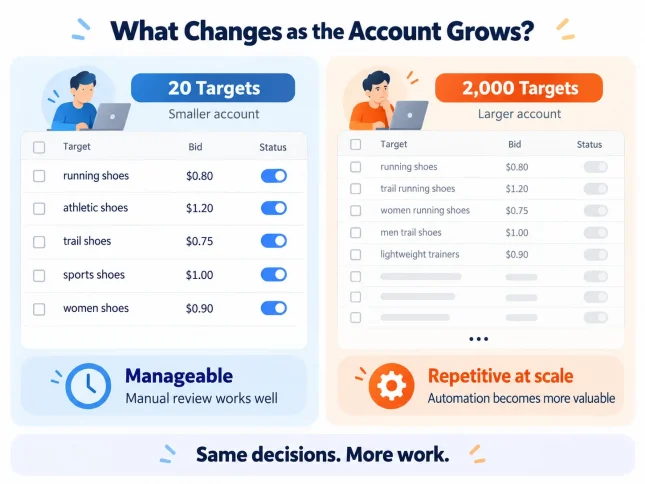
What Changes as the Account Grows?
Individual PPC decisions do not necessarily become harder. There are simply more of them.
Reviewing 20 targets is very different from reviewing 2,000, even if the decision is still whether a bid should go up, down, or stay the same.
This is why account complexity matters more than size alone.
Two sellers with similar advertising spend may have very different workloads depending on their products, campaign structures, and number of targets.
As recurring decisions multiply, automation becomes more valuable.
5 Signs Manual PPC Management Is Becoming a Bottleneck
You do not need to wait until your account feels unmanageable.
These signs can help you recognize when manual execution is starting to limit performance or efficiency.
1. Campaign Reviews Keep Getting Delayed
You plan to review bids, search terms, or budgets regularly, but those reviews keep slipping.
A campaign that should be checked weekly gets reviewed every few weeks instead.
The problem is not knowing what to do. It is finding time to do it consistently.
2. Routine Execution Is Taking Over Your Day
Much of your time goes into changing bids, adding targets, updating budgets, or preparing reports.
The clearest automation opportunity appears when you already know what decision should be made; you are simply repeating it at scale.
If routine execution leaves little time for analysis or strategy, software may be able to take over more of that workload.
3. Opportunities Are Being Missed
Campaign data keeps accumulating whether you review it or not.
Useful search terms may remain undiscovered. Poor traffic may continue spending. Strong campaigns may hit budget limits without timely attention.
When opportunities or problems are missed because there is too much to review, automation starts providing more value.
4. Your Process Depends Too Much on Who Is Available
One week, campaigns are reviewed carefully.
The next week, a product launch, reporting deadline, or another priority gets in the way.
If recurring PPC work depends entirely on someone being available at the right moment, management can become inconsistent.
Automation can make routine execution less dependent on individual schedules.
5. Reporting Has Become Its Own Workload
Campaign management is only part of the job. Someone still has to explain the results.
If you spend hours exporting data, combining spreadsheets, or preparing reports for managers or clients, that workload should also count when evaluating manual PPC management.
Manual PPC vs PPC Software: The Real Trade-Off
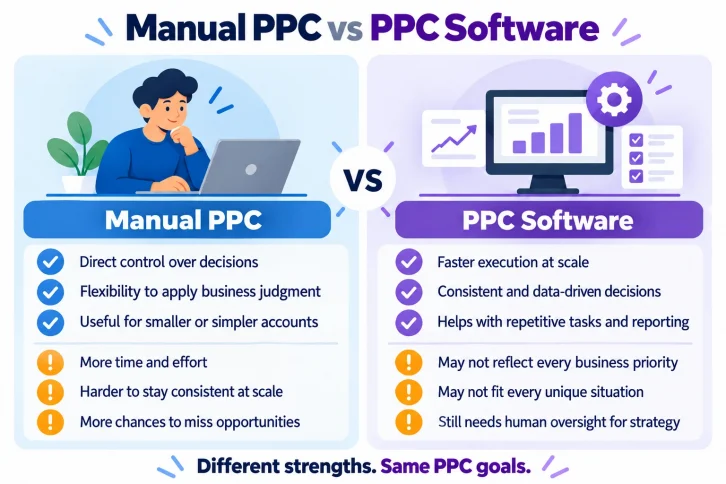
The difference is not simply whether a person or software manages the account.
Each approach has different strengths.
| Factor | Manual Management | PPC Software |
|---|---|---|
| Speed | Slower as recurring work grows | Faster for repeatable tasks |
| Control | Direct control over changes | Depends on settings and guardrails |
| Business Information | Can incorporate inventory, pricing, promotions, and strategy | Acts on available data and inputs |
| Scale | Harder as decisions multiply | Handles high-volume repetition |
| Consistency | Depends on available human time | Can execute routine processes consistently |
| Oversight | Human reviews each decision | Automated actions still need monitoring |
The trade-off is not efficiency versus quality.
It is deciding where software provides leverage and where human attention improves the decision.
What Should Software Take Off Your Plate?
The strongest automation candidates are usually tasks that are:
Repetitive → Data-driven → Easy to monitor
Common examples include:
- Bid adjustments: execute recurring bid decisions across many targets
- Target harvesting and negatives: identify useful or poor-performing traffic
- Budget management: reduce repetitive budget checks and allocation work
- Reporting and monitoring: consolidate performance data with less manual effort
Automation works best when the underlying decision already makes sense.
If the goal, targeting logic, or guardrails are wrong, software can simply repeat the wrong decision faster.
Automate repetitive work. Keep human judgment where business decisions matter.
If campaigns are underperforming, a structured Amazon PPC optimization process can help identify whether the problem comes from targeting, bids, budget, or conversion before you automate changes.
What Should Stay Manual?
As routine tasks become automated, PPC managers can focus more on decisions that require business judgment.
Campaign Goals and Strategy
You still need to decide what each campaign is trying to achieve.
A campaign focused on discovery may need different decisions from one focused on profitability, brand defense, or growth.
Software can execute toward a goal, but you still need to define that goal.
Product Economics
Margins, fees, pricing, promotions, and inventory all affect how much you can afford to spend on advertising.
A campaign may appear efficient based on ACoS while still failing to meet your business’s profitability needs.
These business factors should guide how aggressively you advertise.
Major Structural Decisions
Changes to campaign structure, targeting strategy, or account segmentation require an understanding of your advertising goals.
Software can help create or reorganize campaigns, but advertisers should still decide how the account should be structured and why.
When Should You Start Automating Manual PPC Work?
There is no universal campaign count or ad-spend threshold.
The better signal is when recurring execution starts limiting consistency, visibility, or time for higher-value decisions.
If you already know what should be done but cannot do it often enough, automation is worth considering. Our guide to Amazon PPC automation explains where to start and how to expand gradually.
The Best Setup Is Often Hybrid
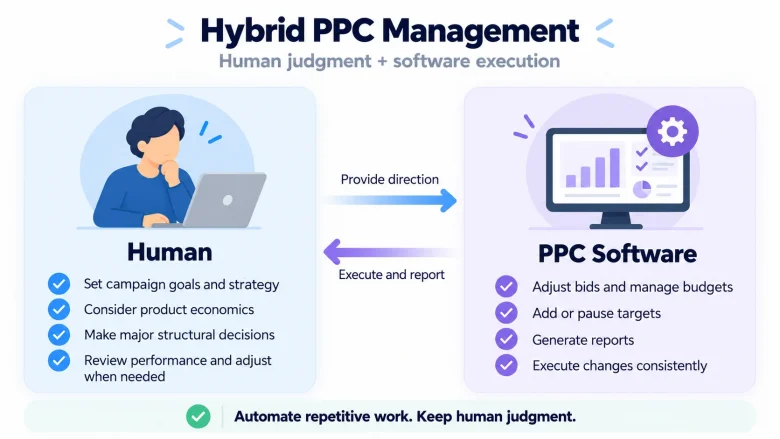
You do not need to choose one management style for your entire account.
A practical approach is to automate routine execution while keeping closer human review where decisions carry more business impact.
Automate More:
- Recurring bid adjustments
- Routine target harvesting
- Negative targeting
- Budget allocation
- Reporting
Keep Closer Human Review:
- Hero products and launches
- Strategic campaigns
- Inventory or pricing changes
- Major structural changes
- Business-critical exceptions
The goal is not to choose one management style for the entire account. It is to put human attention where it adds the most value.
What to Look for Before You Automate
Before choosing software, make sure it offers enough control, transparency, monitoring, and automation coverage for the workflows creating your biggest bottlenecks.
If you are comparing platforms, see our guide to choosing Amazon PPC software.
Move Repetitive PPC Work to BQool Advertising
BQool Advertising helps automate recurring PPC work across several workflows:
| Manual Work | BQool Advertising |
|---|---|
| Reviewing and changing bids | AI-Bidding |
| Finding targets and negatives | AI-Harvesting |
| Reallocating campaign budgets | Auto Budgeting |
| Creating campaigns | Campaign Builder |
| Monitoring performance | Dashboard & Reporting |
| Reviewing automated changes | Ad History |
Instead of spending time repeating campaign changes, you can focus more on the decisions that move your advertising strategy forward.
Key Takeaway
Manual PPC management works as long as the workload is manageable and human review still adds value.
As repetitive decisions grow, software can take over more of the execution.
Automate repetitive work. Keep human judgment where business decisions matter.
The most effective setup is often a mix of both.
FAQ
Is Manual Amazon PPC Management Better Than Automation?
Neither is always better. Manual management offers direct control and can be valuable when decisions require business judgment. Automation becomes more useful as recurring work grows and becomes harder to execute consistently.
When Should I Start Using Amazon PPC Software?
Consider software when campaign reviews are delayed, repetitive tasks consume too much time, opportunities are missed, or account complexity makes manual management inconsistent.
How Many Amazon PPC Campaigns Do I Need Before Using Software?
There is no universal campaign threshold. The better indicator is how much recurring work the account creates and whether you can still manage it consistently.
Can Amazon PPC Software Replace Manual Management Completely?
Software can automate many recurring tasks, but campaign strategy, product economics, major account changes, and decisions affected by business conditions still benefit from human judgment.
What Amazon PPC Tasks Are Best to Automate?
Recurring, data-driven, and easy-to-monitor tasks are usually the strongest candidates, including bid adjustments, target harvesting, negative targeting, budget management, and reporting.
Should Beginners Use Amazon PPC Automation?
Beginners can use automation, but understanding basic bidding, targeting, budgets, and campaign goals helps them evaluate what the software is doing and set appropriate controls.