TL;DR
- Sponsored Brands promotes your whole brand, not just one listing.
- Brand Registry is required to run Sponsored Brands ads.
- Choose one of three campaign goals: Drive Page Visits brings traffic, Grow Brand Impression Share wins Top-of-Search visibility, and Reserve Brand Share of Voice protects your branded searches.
- Ad formats include Product Collection, Store Spotlight, and Video, plus Brand Gallery for Reserve Brand Share of Voice only.
- Pair Sponsored Brands ads with Sponsored Products to build recognition and drive sales.
Most Amazon ads promote a single listing. That can bring sales, but it does little to make your brand recognizable, so you keep paying to push one listing at a time. Amazon Sponsored Brands promotes your entire brand in one ad, so shoppers can see your full brand and browse your catalog.
This guide covers how Sponsored Brands work: its campaign goals, ad formats, the 2026 updates, and how to pair it with Sponsored Products.
In this article, we’ll cover how Sponsored Brands works, including its campaign goals, ad formats, latest updates in 2026, and how to combine it with Sponsored Products to drive business growth.
Overview
- What Is Amazon Sponsored Brands?
- Who Can Use Amazon Sponsored Brands? Eligibility and Registry Requirements
- What Are the Sponsored Brands Campaign Goals?
- Which Sponsored Brands Ad Format Should You Choose?
- What’s New in Amazon Sponsored Brands (2026)
- What Makes Sponsored Brands Unique Compared to Sponsored Products?
- How Sponsored Brands Work With Sponsored Products to Drive Sales
- Conclusion
- FAQs
What Is Amazon Sponsored Brands?
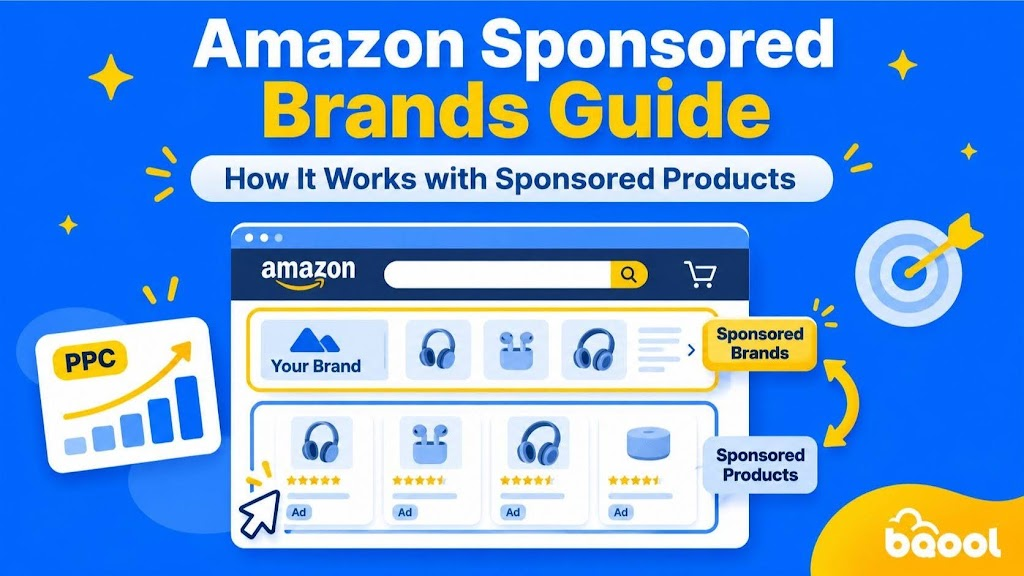
Amazon Sponsored Brands is an ad type that lets sellers promote their whole brand and product catalog. An ad can include a brand logo, a custom headline, images or video, and a selection of relevant products.
Sponsored Brands ads can appear in four placements:
- Top-of-Search (Above organic search results)
- Rest-of-Search (Middle or bottom of search results)
- Product Detail Pages (On relevant product detail pages)
- Amazon Homepage (In eligible homepage placements)
You can use it to build brand recognition, reach new customers, and defend your branded searches. The campaign goal you choose decides which placements you get and what you can achieve with your ads.
Who Can Use Amazon Sponsored Brands? Eligibility and Registry Requirements
Sellers need to be enrolled in Brand Registry to run Sponsored Brands Ads. Amazon Brand Registry is a free program that gives brand owners control over their listings and protection against counterfeits and unauthorized changes.
To register your brand, you need to meet four basic requirements:
- A registered or pending trademark that exactly matches your brand name
- Your brand name or logo permanently printed, stamped, or embossed on the product or packaging (no stickers)
- Unedited photographs of the product and its packaging
- An active Amazon Professional Seller or Vendor Central account in good standing
What Are the Sponsored Brands Campaign Goals?
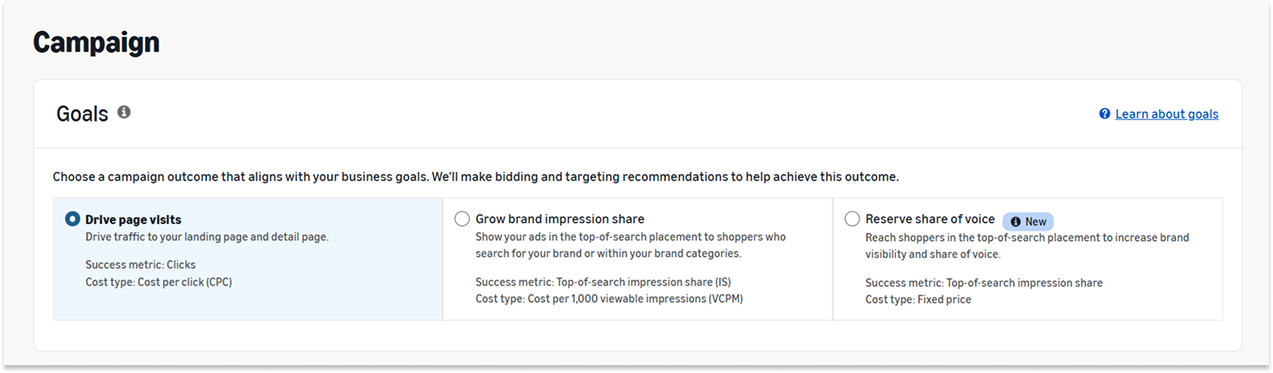
Amazon offers three goals for your Sponsored Brands campaigns:
1) Drive page visit (DPV)
This goal sends shoppers directly to your product detail pages or Brand Store. It is the only goal that unlocks all ad placements, every landing page option, and dynamic bidding.
✅ Pricing and Bidding
DPV uses cost-per-click (CPC), which means you pay only when shoppers click. Amazon can raise your bid by up to 300% when a sale is likely and lower it when unlikely. You can also adjust bids manually by placement or audience segments.
✅ Available Ad Placements
DPV is the only goal that can serve ads in all four placements. Actual availability depends on your ad format, targeting type, and placement bid adjustments.
✅ Supported Ad Formats and Landing Pages
Drive page visit campaign goals support all three ad formats, with these landing pages:
| Ad Format | Supported Landing Pages |
|---|---|
| Product Collection | Brand Store or custom landing page |
| Store Spotlight | Brand Store subpages |
| Video Ads | Product detail page or Brand Store, 1-3 products |
✅ Targeting Options
- Keyword targeting: Target search terms that customers use to find products using broad, phrase, or exact match.
- Product targeting: Target specific products or entire product categories to reach shoppers browsing relevant listings, refined by brand, price range, and review rating.
- Negative targeting: Exclude irrelevant search terms or product pages where you don’t want your ads to appear.
- Theme targeting: Amazon automatically identifies and optimizes keywords related to your landing pages, with suggested bids and automatic updates.
Availability varies by ad format. One campaign can use either keyword or product targeting, so use each type across different campaigns for broader reach.
✅ Key Performance Metric
Clicks are the primary success metric, since the goal is to drive shoppers to your Brand Store or product detail pages.
To judge traffic quality and profitability, also track detailed page views, detail page view rate (the share of impressions that lead to a detailed page view), ROAS, and New-to-Brand orders and sales, which show how many buyers are new to your brand.
✅ When to Choose Drive Page Visits (DPV)
- Traffic is your priority and you want more qualified visits to your Brand Store or product detail pages.
- You want the widest reach across all placements.
- You need to keep ad spend controlled.
- You don’t have time to adjust bids and want to use dynamic bidding.
2) Grow Brand Impression Share (BIS)
This goal wins you a bigger share of Top-of-Search impressions on branded and category keywords, so your ads show above competitors’ ads. Your entire budget goes to Top-of-Search placements, and you pay per 1,000 viewable impressions rather than per click.
✅ Pricing and Bidding
BIS uses vCPM (cost per 1,000 viewable impressions), so you pay for visibility, not clicks. An impression counts as viewable when it meets Amazon’s viewability standard: at least 50% of the ad in view for at least 1 second for display ads, or 2 seconds or longer for video ads. Your vCPM bid is the most you’re willing to pay per 1,000 viewable impressions, but your actual cost depends on auction competition and may be lower.
✅ Available Ad Placements
This whole campaign budget goes to Top-of-Search placements, which sit above organic search results for your targeted keywords on both desktop and mobile. Rest-of-search, product detail pages, and the Amazon homepage aren’t included.
✅ Targeting Options
BIS uses keyword-based targeting only, with no product or ASIN targeting. Keyword, negative, and theme targeting work as described under DPV.
✅ Supported Ad Formats and Landing Pages
BIS has specific ad format and landing page options, built for Top-of-Search visibility.
| Ad Format | Supported Landing Pages | BIS-Specific Detail |
|---|---|---|
| Product Collection | Brand Store or New Landing Page | New Landing Page allows sellers to run BIS campaigns without an existing Brand Store, featuring at least 3 selected products. |
| Store Spotlight | Brand Store subpages | (Same as other goals) |
| Video Ads | Brand Store only | Available even with 0 advertised products |
✅ Key Performance Metrics
Top-of-Search Impression Share (TOS IS) is the primary success metric, because BIS focuses on securing a greater share of prominent search impressions. Additional metrics such as viewable impressions, vCPM, New-to-Brand orders, and sales help advertisers evaluate brand exposure and customer acquisition.
✅ When to Choose Grow Brand Impression Share (BIS)
- Competitors bid on your brand and you want to hold the top spot on your branded searches.
- You’re launching in a competitive category and need to gain awareness fast.
- Category visibility matters more than ACoS, so winning top category keywords is your priority over immediate returns.
- You don’t have a Brand Store yet. You can immediately start with collections ad with a new landing page.
3) Reserve Brand Share of Voice (RSOV)
With reserve brand share of voice (RSOV), you can reserve top-of-search placement for exact-match branded keywords at a fixed, upfront price. Its main purpose is to protect branded search visibility and prevent competitors from taking prominent ad positions when shoppers search for your brand.
✅ Pricing and Bidding
RSOV uses a fixed price, unlike DPV and BIS, which rely on live bidding. Before launch, Amazon calculates the total cost based on your brand keywords, past search traffic, and available ad space. In the US, the minimum lifetime budget is $6,000, which covers the full campaign period you choose.
✅ Available Ad Placements
Ads appear exclusively in the Top-of-Search placement on desktop and mobile.
✅ Targeting Options
You can reserve exact-match keywords that contain your own Brand Registry-verified brand name, with a minimum of five. Amazon checks ownership and eligibility before you can reserve them. Generic terms, competitor brand names, broad or phrase match, theme targeting, and product or ASIN targeting aren’t allowed.
✅ Supported Ad Formats and Landing Pages
RSOV supports all three formats, with a new format only available in this campaign type called “Brand Gallery”.
| Ad Format | Supported Landing Pages |
|---|---|
| Product Collection | Brand Store only |
| Store Spotlight | Brand Store subpages |
| Video Ads | Brand Store or product detail page |
| Brand Gallery | Brand Store or product detail page |
✅ Key Performance Metrics
For RSOV campaigns, the primary success metric is Top-of-Search Impression Share (TOS IS), because RSOV aims to give reserved branded keywords more visibility. Additional metrics, such as CTR, orders, click-attributed sales, and lost Top-of-Search sales help show how shoppers respond.
✅ When to Choose Reserve Brand Share of Voice (RSOV)
- Your brand name is under threat so you want to reserve the top spot on branded searches.
- You can commit a budget upfront and prefer one fixed price with no bid management.
- Shoppers already search for your brand, so there’s enough branded search demand to make reserving those keywords worthwhile.
Which Sponsored Brands Ad Format Should You Choose?
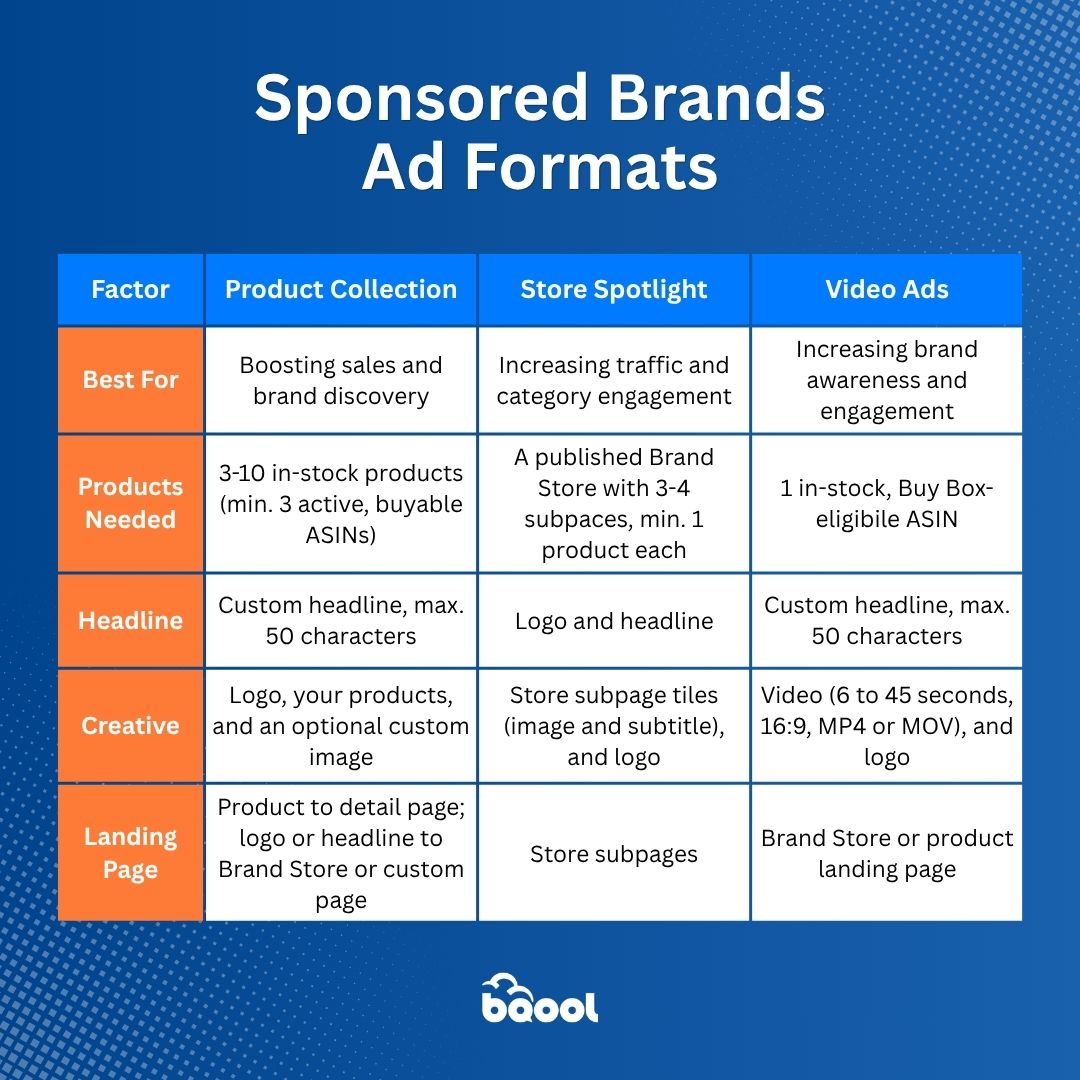
Sponsored Brands has three ad formats: Collections, Store Spotlight, and Video (Plus Brand Gallery for RSOV, covered in the “What’s New” section). Each format has its own creative requirements and suits a different goal, so here’s how they compare.
1. Product Collections
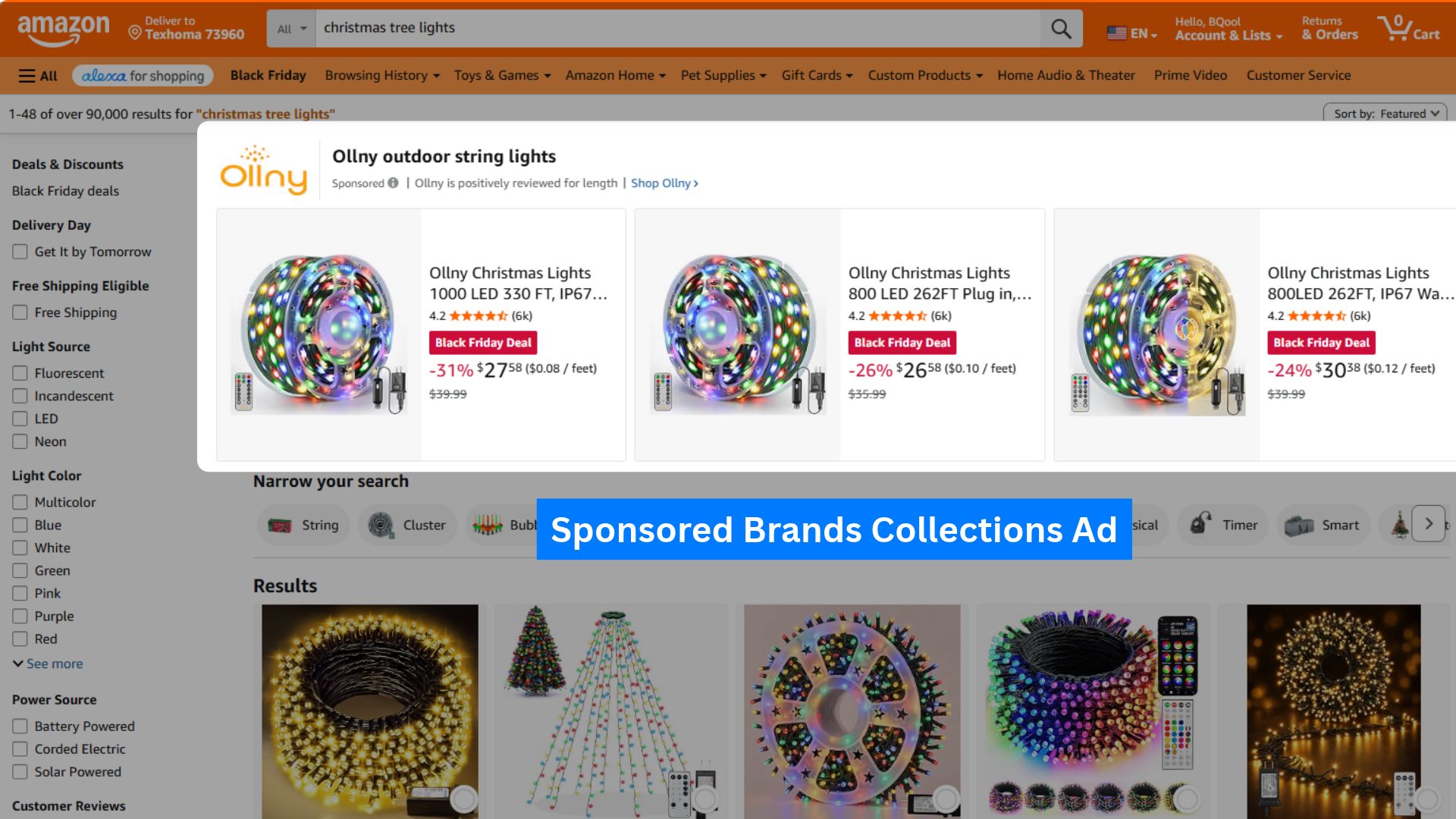
Collections ads show multiple Amazon product listings in a single placement. You add a headline (up to 50 characters), your brand logo, and 3 to 10 in-stock products.
When a shopper clicks your product, they land on the product detail page, and if they click the logo or headline, they go to your Brand Store or a custom landing page. You can also upload a custom image to make the listing look more premium. Collections work best for promoting several products, brand discovery, and lifestyle creative.
2. Store Spotlight
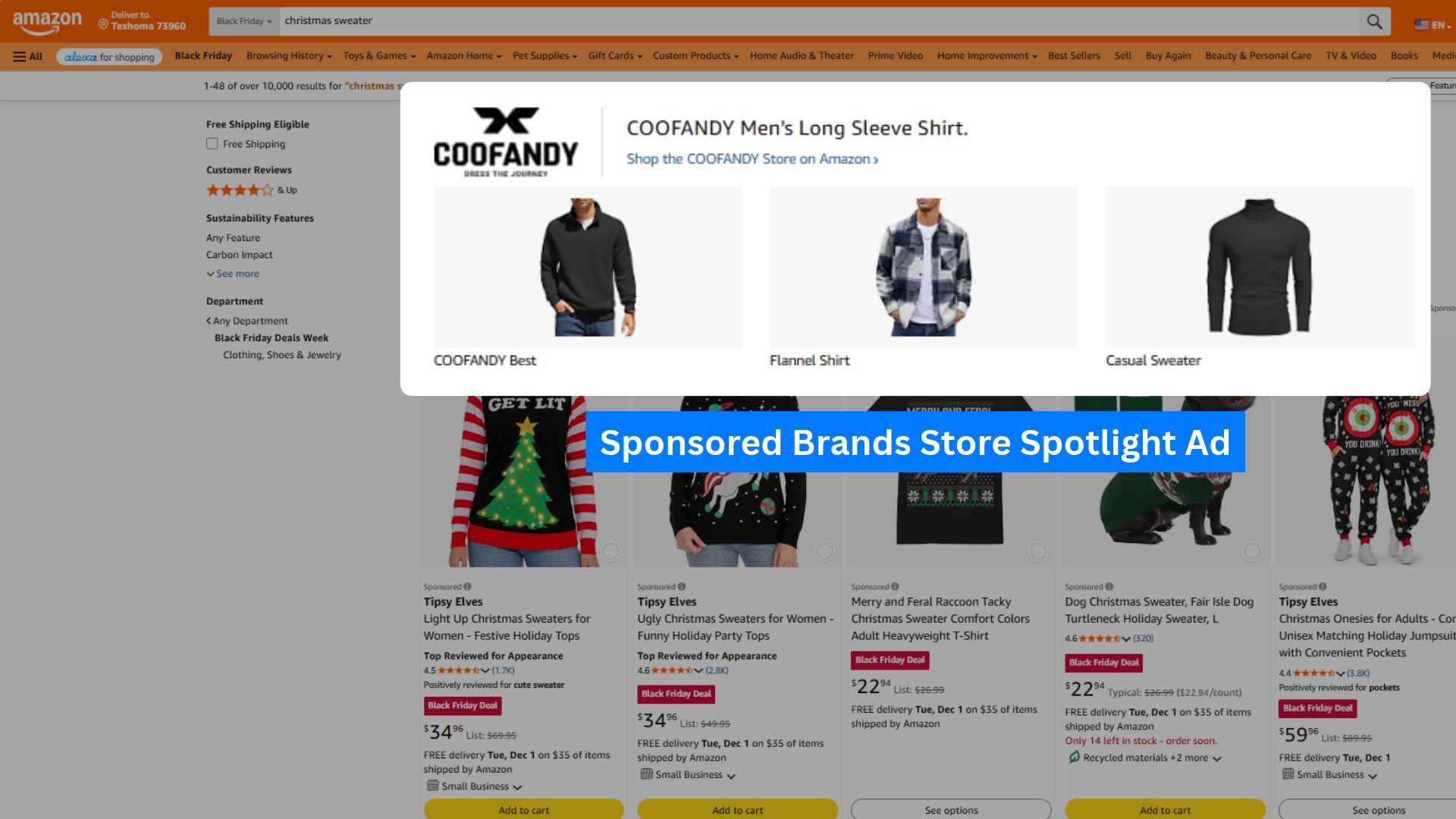
This ad format promotes your brand’s categories instead of individual products. To run it, your Brand Store should have at least three subpages or categories, such as “Best Sellers,” “New Arrivals,” and “Summer Collection,” and each one needs at least one unique product. If you want to show your full product and increase store traffic, this is a good fit.
3. Video Ads
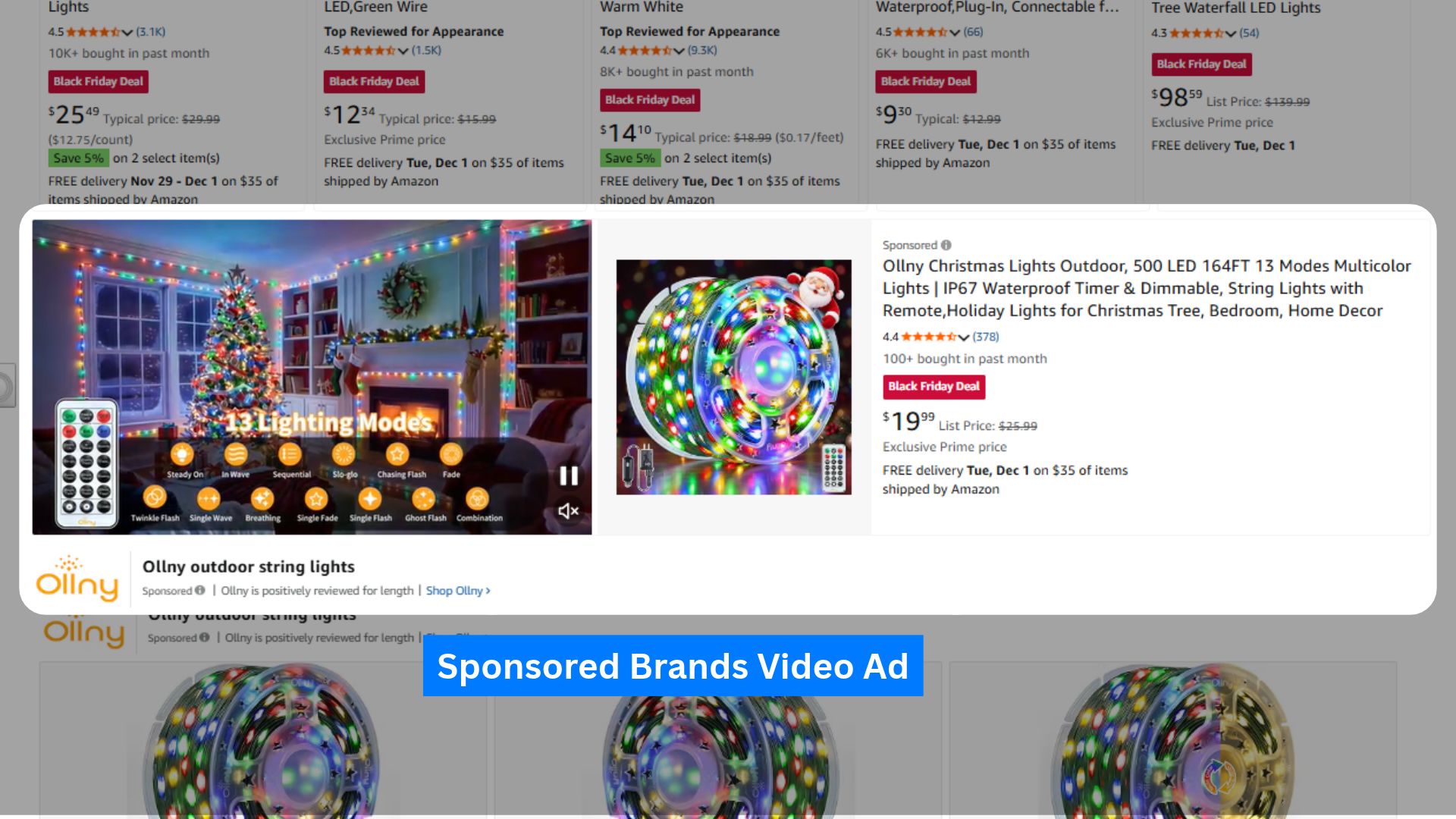
Video ads use motion to stand out more in search results. Upload a video (6 to 45 seconds) with a 16:9 aspect ratio in MP4 or MOV video format, along with a high-resolution brand logo, a custom headline (up to 50 characters), then select the products to feature.
As shoppers scroll through the search results page, the video autoplays without sound, with the featured product’s image, price, and star rating beside it. It’s a strong choice for catching attention and showing a product in action.
To help in choosing, here’s a side-by-side comparison of the three ad formats.
What’s New in Amazon Sponsored Brands (2026)
Brand Gallery
In May 2026, Amazon launched Brand Gallery, a creative format available only in reserve share of voice (RSOV) campaigns. Instead of promoting individual products, it presents your brand through lifestyle imagery, custom text, and a custom headline, with navigation that sends shoppers to your Brand Store categories or collections. You can use it for brand storytelling and point shoppers to the right part of your Brand Store.
Branded Conversations
At its unBoxed event in September 2026, Amazon announced Branded Conversations, the next version of Sponsored Brands prompts. Those prompts appear in shopping results and on product detail pages and send shoppers to a conversation with Alexa for Shopping. It’s expected to launch in the US in January 2027.
Amazon Ads Agent
Sponsored Brands campaigns can now be found in Amazon Ads Agent, which brings ad campaigns together in one platform. The goals, formats, and targeting in this guide work as described, but the interface may look different from older tutorials.
Guided Setup
Amazon added a guided setup to Sponsored Brands automatic collections campaigns to make building them faster. As you create the campaign, Amazon recommends product segments and keyword groups for you to choose from. Once you pick your segments, Amazon curates the relevant products for your collections ad.
What Makes Sponsored Brands Unique Compared to Sponsored Products?
The main advantage of Sponsored Brands is that its value goes beyond a single sale. A Sponsored Products ad can only sell the listing it promotes, while a Sponsored Brands ad adds brand exposure and recognition on top of sales, which benefits your store as a whole. This makes Sponsored Brands the stronger choice when your current goal is growth.
Sponsored Brands vs. Sponsored Products
| Factor | Sponsored Products | Sponsored Brands |
|---|---|---|
| Pricing model | Cost-per-click (CPC) | Cost-per-click (CPC) or vCPM |
| What it promotes | A single product listing | Whole brand (logo, headline, and multiple products) |
| Funnel stage | Bottom funnel (purchase intent) | Top funnel (brand awareness and consideration) |
| Placement | Search results and product detail pages | Top of search, within search results, on product detail pages, and homepage |
| Brand Registry | Not required | Required |
| Where a click lands | Product detail page | Brand Store, product detail page, or a custom page |
| Best for | New products, instant sales, ranking a keyword, sellers without Brand Registry | Defending branded searches, promoting the brand, showing a full product range |
How Sponsored Brands Work With Sponsored Products to Drive Sales
Sponsored Brands and Sponsored Products reach shoppers at different stages of the buying journey, so many brands run both. Sponsored Products captures ready-to-buy searches, while Sponsored Brands introduces your brand.
Here is how the two can work together:
For Product Launches
Sponsored Brands introduces the new product alongside related items through a video or collection ad, while Sponsored Products targets relevant shopping keywords to drive first sales and build ranking.
For Brand Defense
Run Sponsored Products on your top branded products for the same branded searches that Sponsored Brands holds, and let Sponsored Brands send shoppers to your Brand Store.
For Customer Acquisition
Sponsored Brands targets category keywords to introduce your brand, and its New-to-Brand metrics track the results. Sponsored Products converts shoppers with high-intent searches.
For Product Category Expansion
Sponsored Brands showcases a collection from the new category, while Sponsored Products targets category keywords with individual listings to capture active searchers.
For Cross-Selling Products
Sponsored Brands shows related products together and sends shoppers to your Brand Store to explore more, while Sponsored Products places complementary listings on relevant product detail pages.
For more tips & resources on Amazon ads, check out these articles:
Conclusion
Sponsored Brands promotes your whole brand through your logo, headline, creative, and Brand Store, instead of a single listing. Choose the goal that fits your objective: Drive Page Visits for traffic, Grow Brand Impression Share for visibility, or Reserve Brand Share of Voice to protect your branded searches. Pairing it with Sponsored Products, which captures purchase intent, builds brand recognition and drives sales together.
FAQs
1. How much do Amazon Sponsored Brands ads cost?
Other than RSOV campaigns, there’s no fixed price and no minimum spend. Campaigns use either cost-per-click or vCPM. You set a daily budget and your bid, then pay based on whichever model your campaign uses.
For RSOV, you’ll pay a fixed price upfront. In the US, it requires a $6,000 minimum spend.
2. Is Amazon Sponsored Brands worth it?
It depends on your goal. Sponsored Brands is worth it when you want more than single sales. You can gain brand recognition, new customers, and protection for your branded searches.
3. Which countries can use Amazon Sponsored Brands ads?
Sponsored Brands is available in many Amazon marketplaces, including the US, Canada, Mexico, the UK, Germany, France, Italy, Spain, the Netherlands, Japan, and India. You need to be eligible to advertise in the marketplace, and available features can vary by country. Check Amazon Ads for the current list.
4. How do I create a Sponsored Brands campaign?
Sign in to the Amazon Ads console (Amazon Ads Agent) then click Create Campaign. Choose Sponsored Brands, set your name, budget, and dates, pick a goal and a format (Collection, Store Spotlight, or Video), add your keywords and creative, then review and launch.