While most sellers naturally focus on preparation and execution, the period after Prime Day is just as important. This is when sellers can turn event data into practical decisions about which ASINs deserve more investment, which campaigns should receive more budget, and which pricing strategies worked best in the market.
In this article, we aim to guide you on how to review these post-event learnings carefully, so you can keep momentum going and build a stronger strategy for the next major sales event.
Overview
- Quick Answer
- How Did Prime Day 2026 Perform?
- Review Your Prime Day Performance Before Making Changes
- How to optimize your Advertising Campaigns Post-Prime Day
- How to optimize your Repricing Strategy Post Prime-Day
- Prepare Now for the Next Major Sales Event
- What AI Tools Can Help Amazon Sellers After Prime Day?
Quick Answer
After Prime Day, sellers should use their event data to decide what to keep, adjust, and improve. Start by reviewing profit, ROAS, TACoS, conversion rate, Buy Box share, and inventory performance before changing bids or prices. Keep profitable campaigns active, shift budget toward ASINs that converted well, and adjust pricing from discount-focused to margin-focused. Use these post Prime Day learnings to improve your advertising, repricing, inventory planning, and preparation for the next major sales event.
How Did Prime Day 2026 Perform?
Prime Day 2026 showed that shoppers were still willing to buy, but they were more selective and value-driven. Numerator reported that the average Prime Day order size fell to $47.66 from $53.34 in last year’s early read, while average household spend also declined to about $143.45 from $156.37. At the same time, 69% of purchased items were under $20, and more than half of shoppers compared prices across retailers before buying. PMG also found that Prime Day 2026 was a more restrained promotional event than 2025 or 2024, with average discount depth at 20.9% and a smaller share of products carrying discounts. Placer.ai’s analysis of Prime Week traffic suggests that shoppers still responded strongly to compelling deals across major retailers, but their behavior was more deliberate and event-driven.
A clear takeaway is that shoppers are paying closer attention to prices. Numerator reported that more than half of Prime Day shoppers compared prices across retailers before completing their purchases, which shows that buyers are not relying on discounts at face value. Amazon is also making price history easier to check through Alexa for Shopping, which can show 30-, 90-, and 365-day price history. For sellers, this means pricing matters even more. Products that reach the price shoppers are already watching for may be more likely to earn traffic, clicks, and sales.
Review Your Prime Day Performance Before Making Changes
Prime Day also gives you one of the largest sets of business data you’ll collect all year that you can use to reveal patterns that can improve future performance.
Ask yourself:
Which products sold the most? Identify your best-selling ASINs and whether they gained ranking or continued selling after the event.
What prices performed best? Review price changes and Lightning Deal performance to understand which price points attracted the most traffic and conversions.
What were your competitors doing? Look for pricing changes, popular products, and category trends to see how the market responded during Prime Day.
Did you miss sales because of inventory? Check for stockouts, fulfillment delays, or products that went out of stock before demand slowed.
What are customers telling you? Review new ratings and customer feedback to identify common questions, recurring issues, or features shoppers valued most.
How did your business perform overall? Review seller performance, Buy Box share, and product rankings to understand where you gained or lost visibility.
To answer these questions, download reports and compare your Prime Day results with the two to four weeks before the event. Look at key metrics such as revenue, profit, ROAS, TACoS, conversion rate, Buy Box share, and inventory performance. Together, these metrics help you understand whether your growth came from stronger customer demand, better pricing, effective advertising, or simply the increase in Prime Day traffic.
How to optimize your Advertising Campaigns Post-Prime Day
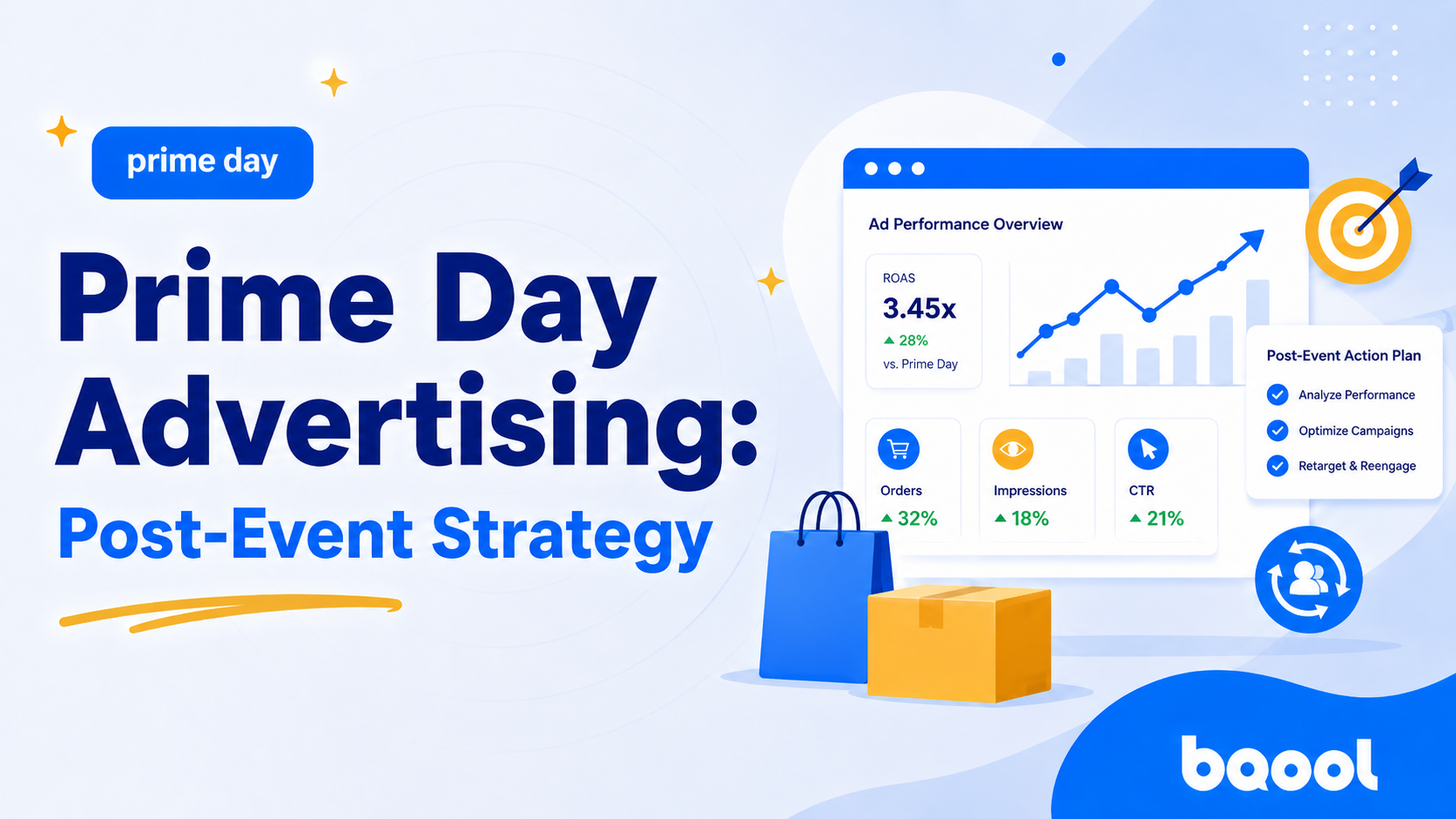
After Prime Day, avoid turning off your advertising too quickly. Instead, use your post prime day learnings to identify which campaigns are still driving profitable sales, which need lower bids, and which should be paused or rebuilt. Shift budget toward ASINs and keywords that converted well, refine targeting with Prime Day search term data, and continue remarketing to shoppers who viewed your products but did not buy. This helps you protect momentum while avoiding wasted ad spend after the event rush slows down.
For a deeper breakdown, read our full guide on Prime Day advertising post-event strategy.
How to optimize your Repricing Strategy Post Prime-Day
After Prime Day, your pricing strategy should shift from chasing sales to protecting profit. Instead of automatically lowering prices to match competitors, review your Buy Box share, remaining inventory, margins, and competitor activity by ASIN. Online arbitrage, retail arbitrage, and private label sellers may need different post-event pricing rules, but the goal is the same: stay competitive without giving away unnecessary margin. Repricers can help sellers manage these changes at scale, especially when pricing rules are based on clear profit floors, inventory levels, and market conditions.
To build a stronger post-event pricing plan, read our full guide for Arbitrage Sellers on post-Prime Day Amazon pricing strategy.
Prepare Now for the Next Major Sales Event
Use your Prime Day learnings to prepare for the next major retail moments, including Back-to-School, Labor Day, Black Friday, and Cyber Monday. In 2026, Black Friday falls on November 27, followed by Cyber Monday on November 30, giving sellers a clear runway to turn Prime Day results into Q4 planning.
Instead of repeating the same post-event work each time, use your Prime Day recap as a planning document. Identify which ASINs showed strong demand, which listings need improvement, and where inventory planning could be stronger before the next traffic spike. The goal is to build a repeatable process, so every major event helps you plan more effectively for the next one.
For more seasonal planning guidance, read our guides on Black Friday and Cyber Monday strategy and Amazon peak seasons.
What AI Tools Can Help Amazon Sellers After Prime Day?
After Prime Day, AI can help sellers turn messy data, ad changes, and pricing decisions into clear next steps they can repeat for future sales events.
For advertising, BQool AI Advertising can help with bid adjustments, budget pacing, keyword harvesting, and ongoing campaign optimization. For pricing, BQool AI Repricer can help sellers stay competitive while protecting profit through AI-powered repricing rules, competitor tracking, price history, and profit-based settings.
With BQool as your selling partner, your post Prime Day learnings can become a stronger system for future events, from Black Friday and Cyber Monday all the way to the next Prime Day.